#laborhistory

41 posts · Last used 10d

Back to Timeline
MikeDunnAuthor @MikeDunnAuthor@kolektiva.social · Aug 04, 2026
Today in Labor History August 4, 1974: The fascist terrorist organization, Ordine Nero, set off a bomb on the Italicus Express train at San Benedetto Val di Sambro, Italy, killing 12 people and wounding 22. Their goal was to destroy the liberal-democratic state because of its alleged tolerance of Communists, dark-skinned immigrants and Jews. #workingclass #LaborHistory #fascism #terrorism #italy #communism #antisemitism #racism #bomb
0
0
0
MikeDunnAuthor @MikeDunnAuthor@kolektiva.social · Aug 04, 2026
Today in Labor History August 4, 1942: U.S. and Mexico began the Bracero Program to provide cheap Mexican labor to replace U.S. workers who were being sent to fight in World War II, and to replace the 500,000 Mexican workers who were deported during the Great Depression in order to mollify xenophobic demands for “white jobs.” The Bracero program also gave farm-owners an alternative to hiring Anglo farm workers who hadn’t been drafted, many of whom were affiliated with the radical IWW. The Bracero program promised decent and sanitary housing and a minimum wage, but these were generally ignored by employers. Additionally, the workers were often subjected to racist attacks. The abuses contributed to the development of the Chicano Movement, the United Farm Workers and other forms of activism. #workingclass #LaborHistory #bracero #chicano #ufw #union #unitedfarmworkers #racism #xenophobia #ww2 #IWW #minimumwage
1
0
2
MikeDunnAuthor @MikeDunnAuthor@kolektiva.social · Aug 04, 2026
Today in Labor History August 4, 1964: Civil rights workers Michael Schwerner, Andrew Goodman and James Chaney were found dead in Mississippi after disappearing on June 21. They were activists with the Congress of Racial Equality promoting voting registration among African Americans. Seven Klu Klux Klan members, including Deputy Sheriff Price, were convicted. #workingclass #LaborHistory #racism #kkk #KuKluxKlan #CivilRights #core #mississippi #murder
0
0
0
calends :trantifa: 🏴️ @calendsofapril@kolektiva.social · Jul 31, 2026
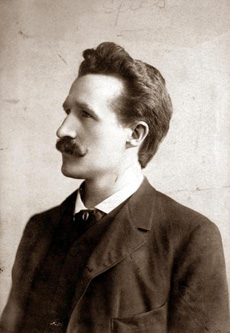
“Here you will tread upon a spark, but here, and there, and behind you, and in front of you, and everywhere, flames will blaze up. It is a subterranean fire. You cannot put it out.” — August Spies, Haymarket martyr, revolutionary anarchist https://libcom.org/article/address-august-spies 1/4 #AugustSpies #subterraneanArt #calendsArt #anarchism #laborHistory #history #historyOfAnarchism #Haymarket #HaymarketAnarchists #HaymarketMartyrs #illustration #drawing #anarchistArt #art #noAI
2
1
5
MikeDunnAuthor @MikeDunnAuthor@kolektiva.social · Jul 31, 2026
Today in Labor History July 31, 1922: A General Strike against Fascism began in Italy, running from July 31 to August 2. Socialists led the strike, which the fascists defeated. Rudolph Rocker, an Anarcho-Syndicalist of the period, said: "… the democratic government armed the Fascist hordes and throttled this last attempt at the defense of freedom and right. But Italian democracy had dug its own grave. It thought it could use Mussolini as a tool against the workers, but thus it became its own grave-digger." In October, 1922, the fascists led a march through Rome, which ultimately led to a coup and their ascension to power. During the march, Mussolini was in Milan, supposedly with a ticket for an ocean liner to flee the country should the fascists fail in the coup. #workingclass #LaborHistory #fascism #mussolini #italy #anarchism #generalstrike #socialism #antifascism
6
0
8
MikeDunnAuthor @MikeDunnAuthor@kolektiva.social · Jul 28, 2026
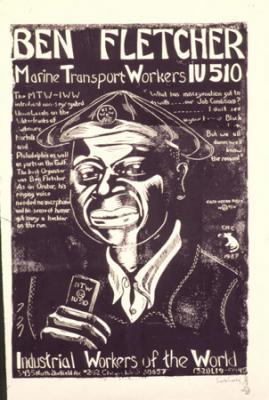
Today in Labor History July 28, 1917: The Silent Parade took place in New York City, in protest against murders, lynchings, and other violence directed towards African Americans. Organizers set up the parade to protest the East Saint Louis race riots (May-July 1917), when whites murdered up to 200 African Americans, and caused 6,000 black residents to become homeless. While Woodrow Wilson was entering World War I to “make the world safe for democracy,” black Americans were asking when he’d do the same for them. The Silent March was organized by a coalition of groups, led by the new NAACP. Up to 15,000 participated. Organizers wanted president Wilson to enact anti-lynching legislation. He refused. Wilson appointed numerous racists to his cabinet and was an outspoken defender of segregation on “scientific” grounds. He was also fond of telling racist jokes. As an academic, prior to his political career, he was an apologist for slavery. And he used his authority to actively prevent admitting African Americans into Princeton as students or faculty. Ironically, one of the primary organizers of the Silent March, W.E.B. DuBois, had been an enthusiastic supporter of the Woodrow Wilson presidential candidacy, calling him a “liberal Southerner,” who would deal fairly with Negros. The East Saint Louis racist pogrom occurred during one of the largest migrations of black workers from the South to the North. Between 1910 and 1920, half a million African Americans migrated north to Chicago, Saint Louis, Detroit, Philadelphia, and other cities. In 1919, there were 38 different racist riots in the U.S., all directed against the black community. The massacre in East Saint Louis began in response to a strike by white employees of the Aluminum Ore Company, after the bosses hired black replacement workers, a common practice of the bosses to divide the working class and weaken unions. Additionally, many of the unions were overtly racist and excluded black workers, including the Aluminum Ore union. To make matters worse, employment agents were going to the South and recruiting African Americans under false pretenses, offering them stable jobs and housing when, in reality, they were being recruited to work as scabs. So, it is likely that many, if not most, of the workers didn’t even know they were being hired as scabs. Regardless, they wouldn’t have been allowed to join the union, either. Racism by unions and white workers was not inevitable in those days, and it was certainly counterproductive to the aims of working people of all backgrounds and identities. Consider that in 1920, in rural Mingo County, West Virginia, when the coal bosses brought in African American workers as scabs, the UMWA encouraged them to join the union and the strike, and achieved solidarity between white, native-born workers, African Americans from the South, and Italian immigrants. This is portrayed in John Sayles film, Matewan. And by 1916, thanks largely to the superb organizing of Ben Fletcher, all but two of Philadelphia’s docks were controlled by the IWW, uniting a workforce that was 33% Irish, 33% Polish & Lithuanian, and 33% African American. Fletcher also traveled up and down the east coast organizing dockers across race. At that time, roughly 10% of the IWW’s 1 million members were African American. Read my biography of Fletcher here: https://michaeldunnauthor.com/2021/05/13/ben-fletcher-and-the-iww-dockers/ #workingclass #LaborHistory #africanamerican #racism #lynching #protest #riots #naacp #union #strike #scab #IWW #benfletcher #webdubois #BlackMastadon
3
0
2
MikeDunnAuthor @MikeDunnAuthor@kolektiva.social · Jul 27, 2026
Today in Labor History July 27, 1918: Miner and union organizer Ginger Goodwin was shot by a hired private cop outside Cumberland, British Columbia sparking Canada's first General Strike. He was a labor activist and a member of the Socialist Party of Canada. Additionally, he was an antiwar activist who said that workers of one country should not be employed to kill workers of another country because of capitalist conflict. “War is simply part of the process of Capitalism,” he said. “Big financial interests will reap the victory, no matter how the war ends.” However, in spite of his protests, he was still drafted to fight in the First World War. In order to avoid conscription, he fled into the mountains, where he was murdered by a cop in 1918. Canada’s first General Strike began in response. https://youtu.be/GrwUueuW6rs The Ballad Of Ginger Goodwin Ginger Goodwin is a name you don't often hear or see. They don't say a word about him in our country's history. He was a labour leader and he wouldn't go to war. "While the army breaks our strikes at home, its strikers I'll fight for." In Trail back in the summer of 1917. Ginger fought against conscription even though he was class D. But when he led a miners' strike to spread the eight hour day Conscription checked him out again and found he was class A. Ginger hid from cops and soldiers in the hills near Cumberland. Miners brought him food and sheltered him, they knew he was their friend. So the bosses hired special cops when their power was at stake. Dan Campbell murdered Goodwin at the head of Comox Lake. The whole damn town of Cumberland turned out for the funeral hike. Vancouver's workers shut her down for a one day general strike. Soldiers back from foreign wars then attacked the labour hall. Both the bosses and the workers knew who caused the Czar's downfall. You can still see Ginger's grave along the road to Cumberland. He didn't win no medals and no one understands. Don't tell me that a hero has to die in foreign lands. We lost heroes here in labour's wars and they all had dirty hands. #workingclass #LaborHistory #gingergoodwin #canada #union #strike #miners #antiwar #police #policebrutality #folkmusic #generalstrike #socialism #onebigunion
3
0
4
MikeDunnAuthor @MikeDunnAuthor@kolektiva.social · Jul 26, 2026
Today in Labor History July 26, 1944: The Red Army liberated Lviv, Ukraine, from the Nazis. Only 300 Jews survived the Nazi occupation out of 160,000 who were living there before the Nazi invasion. The occupation is depicted in several books, including Robert Marshall’s “The Sewers of Lvov” (1991) and Krsytyna Chiger’s memoir “The Girl in the Green Sweater” (2007). Polish director Agnieszka Holland’s film “In Darkness,” which was nominated for an Oscar, is based on these two books. #workingclass #LaborHistory #nazis #fascism #holocaust #redarmy #russia #soviet #ussr #ukraine #books #fiction #historicalfiction #author #writer #film @bookstadon@a.gup.pe
2
0
9
MikeDunnAuthor @MikeDunnAuthor@kolektiva.social · Jul 26, 2026
Today in Labor History July 26, 1990: President George H.W. Bush signed the Americans with Disabilities Act (ADA) into law. On April 5, 1977 U.S. disability rights activist stormed and occupied the offices of the US Department of Health, Education, and Welfare (HEW) in Atlanta, Boston, Chicago, Denver, Los Angeles, New York City, Philadelphia, San Francisco, and Seattle. They demanded enactment of section 504 of the Rehabilitation Act of 1973, which had passed Congress four years prior. The law mandated that no federally funded programs could exclude persons with disabilities and put into place legal protections, and the right to accommodations, for students with disabilities. During the San Francisco protests, disability rights activists Judith Heumann, Kitty Cone, and Mary Jane Owen organized a 25-day occupation of the US Federal Building with 150 other activists. Solidarity support was provided by the Black Panthers, allied politicians, and the International Association of Machinists, who donated food, mattresses, wheelchairs, and other equipment, and who helped a delegation get to Washington, D.C. The regulations for section 504 were ultimately signed into law on 28 April, 1977. For a really great documentary on the birth of this movement, please see “Crip Camp, A Disability Revolution” (2020). #workingclass #LaborHistory #CivilDisobedience #occupation #directaction #disability #ableism #union #solidarity # #blackpanthers #sanfrancisco #JudithHeumann #KittyCone #MaryJaneOwen #BlackMastodon
4
0
8
MikeDunnAuthor @MikeDunnAuthor@kolektiva.social · Jul 26, 2026
Today in Labor History July 26, 1894: President Grover Cleveland created a Strike Committee to investigate the causes of the Pullman strike and the subsequent walkout by the American Railway Union, led by Eugene Debs. After four months, the commission absolved the strikers and placed the blame entirely on Pullman and the railroads for the conflict. Roughly 250,000 workers participated in the strike. An estimated 70 workers died, mostly at the hands of cops and soldiers. To appease workers, the government came up with a new holiday, Labor Day, to commemorate the end of the Pullman Strike. However, President Cleveland had other interests in creating the new holiday. Rather than rewarding workers, his goal was to bury the history of the Haymarket Affair and the radical anarchist and socialist history of the labor movement by choosing any day other than May 1 as the new national labor holiday. On May 1, 1886, 350,000 workers went on strike across the U.S. to demand the eight-hour workday. It was the world’s first May Day/International Workers’ Day demonstration—an event that has been celebrated ever since, by nearly every country in the world, except for the U.S. Two days later, Chicago Police and Pinkertons attacked protesters, killing at least one person. On May 4, anarchists organized a demonstration at Haymarket Square to protest that police violence. Somebody threw a bomb, which killed at least one cop. The police opened fire, killing another seven workers. Six police also died, likely from “friendly fire” by other cops. The authorities went on a witch hunt, rounding up most of the city’s leading anarchists and radical labor leaders. They ultimately convicted seven anarchists, even though none of them were present at Haymarket Square when the bomb was thrown, and executed four of them in 1887, including Albert Parsons. After her husband’s execution, Lucy Parsons continued her radical organizing, writing, and speeches. In 1905, Lucy cofounded the Industrial Workers of the World (IWW), along with Mother Jones, Big Bill Haywood, Eugene Debs, James Connolly, and others. You can read my complete article about the Great Upheaval here: https://michaeldunnauthor.com/2024/03/31/the-great-upheaval/ You can read my biography of Lucy Parsons here: https://michaeldunnauthor.com/2024/03/24/lucy-parsons/ #workingclass #LaborHistory #pullman #strike #railroad #eugenedebs #socialism #laborday #haymarket #anarchism #union #policebrutality #police #IWW #lucyparsons #pinkertons #mayday
5
0
6
MikeDunnAuthor @MikeDunnAuthor@kolektiva.social · Jul 26, 2026
Today in Labor History July 26, 1937: Photojournalist and antifascist Gerda Taro was killed while covering the Spanish Civil War. She was 26. Thousands attended her funeral. Taro was a German Jew, who had to flee Germany after being imprisoned for her anti-Nazi activism. While living in exile, in France, she met another Jewish exile and photojournalist, Endre Ernő Friedmann. Together they published their work under the pseudonym Robert Capa. Scholar Hanno Hardt described their work as such: "Taro and Capa helped invent the genre of modern war photography while fueling the vicarious experience of the spectator by offering an approximation of life in the conflict zone." After Taro’s death, Friedmann would retain the name Robert Capa and go on to become recognized as one of the greatest photojournalists ever. In 1947, he cofounded the Magnum photojournalism cooperative, which included other great photographers, like Maria Eisner, Henri Cartier-Bresson, George Rodger, and William and Rita Vandivert. Madrid and Paris both named streets for Taro, Calle Gerda Taro and Rue Gerda Taro, respectively. Helena Janeczek portrayed Taro in her historical novel, The Girl With the Leica (1917). #workingclass #LaborHistory #fascism #nazis #antifascism #jewish #antisemitism #hitler #franco #gerdataro #robertcapa #journalism #photography #photojournalism #spain #civilwar #fiction #historicalfiction #novel #books #author #writer @bookstadon@a.gup.pe
2
0
5
MikeDunnAuthor @MikeDunnAuthor@kolektiva.social · Jul 26, 2026
Today in Labor History July 26, 1877: Federal troops killed up to 30 workers at the "Battle of the Viaduct," Chicago, during the Great Upheaval (AKA Great Train Strike). This came after the Workingmen’s Party (affiliated with the First International), organized a rally of six thousand people. At this gathering, a former Confederate Army Officer from Waco, Texas, named Albert Parsons, gave a fiery speech. The events of the Great Upheaval radicalized Parsons and his wife Lucy. In the years following it, they became some of the nation’s leading anarchist organizers. The state executed him in 1887 as one of the Haymarket Martyrs who had been fighting for the eight-hour workday. His widow, Lucy, an African American woman, went on to cofound the radical Industrial Workers of the World, in 1905, along with Mother Jones, Eugene Debs, Big Bill Haywood, and others. The day after Parsons’ speech, protests erupted. Police fired into the crowd, killing three men. The next day, an armed demonstration of 5,000 workers fought the police and soldiers in the Battle of the Viaduct, when they killed as many as 30 more workers and injured over one hundred. One journalist wrote, “The sound of clubs falling on skulls was sickening for the first minute, until one grew accustomed to it. A rioter dropped at every whack, it seemed, for the ground was covered with them.” A judge later found the police guilty of preventing the workers from exercising their right to freedom of speech and assembly The Great Upheaval was a national strike wave involving major uprisings in Martinsburg, WV, Baltimore, Pittsburgh, Saint Louis, San Francisco, Boston, Reading, PA, New York and many other cities. I write about it in my historical “Great Upheaval Trilogy.” My first book, “Anywhere But Schuylkill,” takes place in the years immediately preceding the Great Upheaval. Book II, “Red Hot Summer in the Smoky City,” my current WIP, takes place in Pittsburgh, at the height of the Great Upheaval. You can read my complete article about the Great Upheaval here: https://michaeldunnauthor.com/2024/03/31/the-great-upheaval/ You can read my biography of Lucy Parsons here: https://michaeldunnauthor.com/2024/03/24/lucy-parsons/ And you can get my book ANYWHERE BUT SCHUYLKILL from these indie book sellers: https://www.keplers.com/ https://www.greenapplebooks.com/ Or send me $25 via Venmo (@Michael-Dunn-565) and your mailing address, and I will send you a signed copy! #workingclass #LaborHistory #chicago #massacre #railroad #GeneralStrike #wildcat #strikewave #IWW #socialism #haymarket #anarchism #lucyparsons #policebrutality #policemurder #fiction #novel #historicalfiction #writer #author #books @bookstadon@a.gup.pe
2
0
6
MikeDunnAuthor @MikeDunnAuthor@kolektiva.social · Jul 25, 2026
Today in Labor History July 25, 2010: WikiLeaks published classified documents about the War in Afghanistan, one of the largest leaks in U.S. military history. The leak included 91,000 Afghan War documents, covering the period from January 2004 to December 2009. Prior to the release, WikiLeaks made the logs available to “The Guardian,” “The New York Times” and “Der Spiegel.” The Times said the leak "offers an unvarnished and grim picture of the Afghan war." The Guardian called it "one of the biggest leaks in U.S. military history ... a devastating portrait of the failing war in Afghanistan, revealing how coalition forces have killed hundreds of civilians in unreported incidents, Taliban attacks have soared and NATO commanders fear neighboring Pakistan and Iran are fueling the insurgency." The documents also revealed that U.S. military contractors had hired local male child prostitutes. As a result of the leaks, the U.S. government launched a criminal investigation into Wikileaks, and its founder, Julian Assange, who spent years under British custody. And the U.S. fought aggressively to get him extradited to the U.S., where he would have faced multiple life sentences for espionage. Watch the original leaked footage here: https://youtu.be/5rXPrfnU3G0?t=2 #workingclass #LaborHistory #wikileaks #julianassange #imperialism #freespeech #censorship #prison #politicalrisoners #espionage #nato #warcrimes #humanrights
3
0
1
MikeDunnAuthor @MikeDunnAuthor@kolektiva.social · Jul 24, 2026
Today in Labor History July 24, 1777: The Boston Coffee Riot occurred when a mob of at least 100 working-class women seized coffee from Thomas Boylston, who was deliberately hording it to further inflate prices. When he refused to hand over the keys to his store, they seized him by the neck and tossed him into a cart, threatening to deport him from town, according to Abigail Adams. She also claimed that the women spanked Boylston, while a crowd of men watched. There were regular food shortages in the revolutionary period of the early United States, from 1776-1779, and merchants often exploited these shortages by inflating their prices, resulting in over 30 riots, mostly led by women. In August, 1777, there was a food riot in East Hartford, CT, in which the mostly female crowd seized over 200 pounds of sugar being stored for the Continental Army. #workingclass #LaborHistory #women #inflation #foodprices #revolution
1
0
2
MikeDunnAuthor @MikeDunnAuthor@kolektiva.social · Jul 23, 2026
Today in Labor History, July 23, 1944: Madeleine Riffaud, 19, got off her bicycle, pulled out a gun, and assassinated a Nazi military officer as he took a stroll over the river Seine. She was pursued by French collaborators with the Nazis, beaten, tortured and imprisoned in a concentration camp. She escaped, but was later caught, eventually being released in a prisoner swap. She then joined the armed uprising against the Nazis. She had said she wanted to murder a Nazi in broad daylight to encourage the demoralized population. At the age of 18, she worked as a midwife in a Grenoble sanitarium, where she also helped hide Jews and Resistance Fighters, and helped operate a clandestine printing press. After the war, she was inspired and encouraged to write by the surrealist poet, Paul Eluard. She became a journalist for the communist newspaper L'Humanité, and other left-wing publications, reporting on anti-colonial rebellions in Algeria and Vietnam. She saw her reporting as a continuation of her anti-fascist fighting, writing that "a people who oppress another can never be a free people." In another quote, she said: “I didn't want France to do elsewhere what the Nazis wanted to do here.” She also wrote poetry and a memoir: On l'appelait Rainer (Called Rainer). Her first poetry collection was published in 1945, with a preface by Eluard, and a portrait of herself on the cover, drawn by Pablo Picasso. In 1974, after working in a Paris hospital, she wrote her best-seller “Les Linges de la nuit” exposing the poor working conditions of hospital workers in France. She died, at the age of 100, in 2024. #workingclass #LaborHistory #nazis #fascism #antifa #antifascism #journalism #france #communism #poetry #memoir #books #author #writer #poet #bookstadon@a.gup.pe
334
20
332
MikeDunnAuthor @MikeDunnAuthor@kolektiva.social · Jul 23, 2026
Today in Labor History July 23, 1892: Anarchist Alexander Berkman tried to assassinate industrialist Henry Clay Frick in retaliation for the 9 miners killed by Pinkerton thugs on July 6, during the Homestead Steel Strike. Frick was the manager of Homestead Steel and had hired the Pinkertons to protect the factory and the scab workers he hired to replace those who were on strike. Berkman, and his lover, Emma Goldman, planned the assassination hoping it would arouse the working class to rise up and overthrow capitalism. Berkman failed in the assassination attempt and went to prison for 14 years. He wrote a book about his experience called, “Prison Memoirs of an Anarchist” (1912). He also wrote “The Bolshevik Myth” (1925) and “The ABC of Communist Anarchism” (1929). You can read my complete article on the Pinkertons here: https://michaeldunnauthor.com/2024/04/04/union-busting-by-the-pinkertons/ #workingclass #LaborHistory #anarchism #communism #alexanderberkman #prison #assassination #strike #steel #carnegie #massacre #emmagoldman #pinkertons #books #writing #author @bookstadon@a.gup.pe
1
0
4
MikeDunnAuthor @MikeDunnAuthor@kolektiva.social · Jul 22, 2026
Today in Labor History July 22, 1895: Nigerian jazz musician August Agbola O'Browne was born. He is believed to be the only black person to have participated in the 1944 Warsaw Uprising against the Nazi occupation. O’Browne had emigrated to Britain, and then traveled to Poland with a travelling theater group. He was the first African man to record a jazz album in Poland. In 1949, he joined the Union of Fighters for Freedom and Democracy in Warsaw. His code name was “Ali.” Before the uprising, he helped distribute underground papers. He survived the war and continued his musical career. He died in Britain in the 1970s. #workingclass #LaborHistory #nazis #fascism #antifascism #poland #augustobrown #nigeria #warsaw #uprising #jazz #BlackMastodon
16
0
23
MikeDunnAuthor @MikeDunnAuthor@kolektiva.social · Jul 22, 2026
Today in Labor History July 22, 1877: A General Strike began in St. Louis, as part of the national Great Upheaval wave of wildcat strikes. The St. Louis strike is generally considered the first General Strike in U.S. history. It was organized by the communist Workingman’s Party and the Knights of Labor. In addition to joining in solidarity with striking rail workers, thousands in other trades came out to fight for the 8-hour day and an end to child labor. For nearly a week, workers controlled all functions of society. Black and white workers united, even though the unions were all segregated. At one rally, a black steamboat worker asked the crowd if they would stand behind levee workers, regardless of race. “We will!” they shouted back. Another speaker said, “The people are rising up in their might and declaring they will no longer submit to being oppressed by unproductive capital.” Whereas most of the worker uprisings that were occurring throughout the U.S. were spontaneous wildcat strikes (as most of the unions were opposed to the great strike), the situation in St. Louis was led by communists and was revolutionary. “There was a time in the history of France when the poor found themselves oppressed to such an extent that forbearance ceased to be a virtue, and hundreds of heads tumbled into the basket. That time may have arrived with us.” A cooper said this to a crowd of 10,000 workers in St. Louis, in July, 1877. He was referring to the Paris Commune, which happened just six years prior. Like the Parisian workers, the Saint Louis strikers openly called for the use of arms, not only to defend themselves against the violence of the militias and police, but for outright revolutionary aims: “All you have to do is to unite on one idea—that workingmen shall rule this country. What man makes, belongs to him, and the workingmen made this country.” Karl Marx enthusiastically followed events during the Great Strike. He called it “the first uprising against the oligarchy of capital since the Civil War.” He predicted that it would inevitably be suppressed, but might still “be the point of origin for the creation of a serious workers’ party in the United States.” Ironically, many of the Saint Louis activists were followers of Ferdinand Lasalle, whom Marx despised, and who believed that communist revolution could happen through the vote. And some of them, like Albert Currlin, a Workingmen’s Party leader in Saint Louis, were outright racists, who mistrusted the black strikers and refused to work with them, undermining the success of the commune. Ultimately, 3,000 federal troops and 5,000 deputized police (i.e., vigilantes) ended the strike by killing at least 18 people and arresting at least 70. My novel, “Anywhere But Schuylkill,” is about the coal strike that preceded the Great Upheaval. My work in progress, “Red Hot Summer in the Big Smoke,” takes place in Pittsburgh, during the Great Upheaval. You can get my novel from any of these indie retailers: https://www.keplers.com/ https://www.greenapplebooks.com/ Or send me $25 via Venmo (@Michael-Dunn-565) and your mailing address, and I will send you a signed copy! You can also read my complete article on the Great Upheaval here: https://michaeldunnauthor.com/2024/03/31/the-great-upheaval/ You can read my complete article on the Pinkertons here: https://michaeldunnauthor.com/2024/04/04/union-busting-by-the-pinkertons/ #workingclass #LaborHistory #greatupheaval #paris #commune #Revolutionary #communism #saintlouis #pinkertons #GeneralStrike #wildcat #strike #knightsoflabor #workingmensparty #marx #solidarity #books #author #writer #fiction #historicalfiction @bookstadon@a.gup.pe
10
0
7
MikeDunnAuthor @MikeDunnAuthor@kolektiva.social · Jul 22, 2026
Today in Labor History July 22, 1946: In a terrorist attack, the right-wing Zionist group, Irgun, bombed the King David Hotel in Jerusalem, killing 91 people. The hotel was the site of the civil administration and military headquarters for Mandatory Palestine, a League of Nations political entity set up from 1920-1948. During World War I, the UK promised independence to the Arabs in Palestine if they rose up against the Ottomans, who controlled the Levant at that time. The Palestinian Arabs did rise up, helping to force out the Turks. However, the British betrayed them, dividing up the land with the French under the Sykes-Picot Agreement. During that same time, Jewish militias were organizing to create an independent Jewish state in Palestine. The attack on the King David was part of the “Jewish Insurgency” (AKA “Palestine Emergency”), a paramilitary campaign carried out by underground Jewish terrorist organizations against the British in order to create a Jewish state. Disguised as Arab workmen and waiters, Irgun operatives gained access to the hotel basement, where they placed a bomb. They did it in retaliation for Operation Agatha, when the British authorities raided Jewish Insurgency members’ homes and offices and arrested many of their members. Much of the British intelligence on the Jewish militias was stored in the King David Hotel. Mechachem Begin, Israeli Prime Minister from 1977-1983, had been a leader of the terrorist organization Irgun. He specifically targeted the British and supported the King David bombing. The British declared him a terrorist and refused to let him enter the UK from 1952-55. Other Israeli prime ministers also had backgrounds in Irgun, Haganah, and/or the Jewish Resistance Movement. Irgun was an offshoot of another terrorist organization, Haganah, which would ultimately evolve into the Israeli Defense Forces (IDF). Irgun was based on Revisionist Zionism, which promoted maximum expansion of Jewish territory on both sides of the Jordan River. In addition to attacks on the British, Irgun routinely attacked Arab villages, slaughtering men, women and children. Hannah Arendt and Albert Einstein, both Jewish, wrote a letter to the New York Times in 1948 comparing Irgun to the Nazis. #LaborHistory #workingclass #israel #palestine #terrorism #zionism #bombing #massacre #turkey #jewish #arab #FreePalestine
3
0
10
MikeDunnAuthor @MikeDunnAuthor@kolektiva.social · Jul 19, 2026
Today in Labor History July 19, 1936: The People’s Olympiad was schedule to begin in Barcelona, in opposition to the fascist one that was officially scheduled to begin in Berlin. Even though Barcelona lost its bid to host the official Olympics, it continued to build its main stadium, in response to the growing fascism and racism in Germany, with the goal of hosting an inclusive, non-racist, and anti-fascist Olympics. Many of the athletes who went to Barcelona to compete were antifascist activists, themselves. However, just days before the People’s Olympics were set to begin, Spain had its own fascist coup, led by Francisco Franco, who would go on to run the country as a fascist dictatorship from 1936 until 1974. Many of the athlete who had travelled to Barcelona for the games remained there after the coup, becoming some of the first International Brigades who fought the fascists. At the time, Spain had become a Republic, and was governed by the Popular Front, a coalition of left and leftist parties including the Spanish Socialist Workers' Party (PSOE), Communist Party of Spain (PCE), the Republican Left, and the Republican Union. It was initially supported by Galician and Catalan nationalists, the POUM, the socialist Workers' General Union (UGT), and the anarchist trade union, the Confederación Nacional del Trabajo (CNT). However, many other anarchists did not support the Popular Front politically, while still fighting with them against the fascists during the Civil War that followed. 6,000 athletes had registered for the People’s Games, including many from the U.S., the U.K., and exiles from Nazi Germany and fascist Italy. There were teams from French-occupied Algeria and other stateless or occupied nations. There were teams of Jewish refugees, and teams made up of Basque and Catalan nationalists. Teams were also fielded by unions, as well as by socialist and communist organizations. #workingclass #LaborHistory #fascism #antifascism #nazis #barcelona #germany #olympics #racism #colonialism #anarchism #socialism #communism
3
0
5