
#etymology
26 posts · Last used 13d

Did you know that kings walked in the same pace as cows?
Today we still use the term CowOrKingsPace.
#shitpost #etymology #coworkingspace

OK started as a joke.
March 23, 1839: the Boston Morning Post used "o.k." for a deliberately misspelled "oll korrect". 1830s slang comedy.
Van Buren's 1840 campaign borrowed it (nickname: Old Kinderhook). Supporters formed "OK Clubs". It stuck.
1844 telegraph made it infrastructure. WWII took it to every continent.
Even the languages that tried to keep it out (French, Icelandic) use it.
#Etymology #Linguistics
"Eventually" is a false friend.
In English: ultimately, in the end.
In French (éventuellement), German (eventuell), Spanish (eventualmente), Portuguese (eventualmente), Italian (eventualmente): possibly.
All from Latin "eventualis" ("relating to an outcome"). English narrowed to "ultimate outcome". Every other major European language kept the original "possible" sense.
Same Latin root. English took the outlier path.
#Etymology #FalseFriend #linguistics
Replying to
@VenusianMars@cupoftea.social
aka…
self-aware…
no?
#Autism #ActuallyAutistic #AutisticActually #ASD #etymology #WordsAreCool

"...The word “autism” is composed of two parts, “aut” and “ism.” The prefix of the word is “aut,” which comes from the Greek word “autós,” meaning “self.” The suffix “ism,” also from Greek, implies a state of being or condition. When I looked at the prefix and suffix of the word combined, I found that the word “autism,” in its purest form, means “a state of being oneself."..
Wowsers! Yes. Thank You. ♡ 🧡 ♡
#Autism #ActuallyAutistic #AutisticActually #ASD #etymology #WordsAreCool
https://www.jewishboston.com/read/etymology-of-the-word-autism/
"Botulism" sounds a lot better than "sausage-fatty-acid"
https://www.wordorigins.org/big-list-entries/botulism-botox
#etymology #wordorigins #language

Today I learned the word #ableism - am I the only one who first read ableist as /ab'laist/ (instead of /'ejblist/) and inferred connection with the German word Leistung instead of disabled people? I am therefore a huge proponent of using #ablism instead.
In hindsight, it could have been even /e'bleist/, like along, aside and awry (no, the latter does not come from awe/awre but from wry, an equal surprise to me).
#pronunciation #etymology
The #ConnectedAtBirth #etymology of the week is CLIMATE/LID #wotd #climate #lid #climatechange #wildfires #smoke

I've been making a linguistics puzzle game where you decipher a language (which happens to be German) using shared etymology, shared cultural knowledge and pattern matching.
It's called German Is A̶w̶f̶u̶l̶ Easy and the first five levels are up! No German knowledge necessary, and feedback is very welcome.
https://michellefullwood.com/languages/german/is-easy/
#etymology #linguistics #puzzles #LearnGerman
The surprisingly connected origins of "champion" and "champagne". #etymology #wordnerd #linguistics #HistoricalLinguistics #language #words #lingcomm #champion #champagne #worldcup #final
https://youtube.com/shorts/H6FewWiVhpU
Champion/Champagne #etymology
"Podfic is the ultimate portmanteau"
[https://www.tumblr.com/thelightcomingthroughthewindow/818787281751212032?source=share]
#fromTumblr #words #etymology

No. 46 in my photo collection of signs of unique Spanish-language business names ending in 𝗲𝗿í𝗮: DISQUERÍA
Broadly, "disco" in Spanish means "disc" or "disk" in English, including specifically an audio/video disc, vinyl record, etc., with a "disquería" being a store selling such products.
Note that the 𝗰 in "disco" has changed to 𝗾𝘂 in the process of adding the 𝗲𝗿í𝗮 suffix. In Spanish, as in English, a 𝗰 followed by an 𝗮, 𝗼, or 𝘂 has a hard "k" sound while a 𝗰 followed by an 𝗲 or 𝗶 has a soft "s" sound. The last letter of the root word is dropped before adding the 𝗲𝗿í𝗮 suffix, so in this case we'd end up with "discería." But this would cause the 𝗰 to undergo a change in pronunciation from a hard to soft sound. In Spanish, a word's original pronunciation must be maintained during conjugation or when adding a suffix, so the 𝗰 must be changed to 𝗾𝘂 to maintain a hard "k" sound, giving us "disquería."
January 2025 | Santiago, Chile
To view all of the 𝗲𝗿í𝗮 photos I've posted so far, visit my Collection here: https://pixelfed.social/c/867505112495812844
#spanish #language #signs #streetphotography #urbanexploration #urbanwalking #graphicdesign #etymology
The word emolument originates from the Latin term emolumentum, which initially referred to a payment made to a miller for grinding grain.
It derives from the root molere, meaning “to grind,” combined with ex- (“out”) to form emolere (“to grind out”).
Over time, the meaning broadened to signify profit, gain, or advantage, particularly in the context of compensation for services or employment.
#language #etymology #history #emoluments #American

It didn’t occur to me to look up the word “ostrich” until I saw the Spanish word for it “avestruz”. The ave (bird) revealed that “os” is the same as the aus in auspicious. So, bird what? Turns out strich/struz means “sparrow”, so ostrich means “bird sparrow”. But wait! Apparently sparrow was historically used as a generic term for all kinds of birds. So an ostrich is a bird bird!
#etymology #language #birds
https://www.etymonline.com/word/ostrich

https://mapologies.com/time/
While Romance and Baltic languages often differ, they share the Proto-Indo-European root *wósr̥, meaning “#spring” and originally “becoming #warmer.” For example, the Portuguese “verão” and Latvian “vasara” derive from this root. Similarly, the German “Sommer” and Kurdish “havîn,” despite their different appearances, both stem from the Proto-Indo-European root *semh₂-, meaning “summer” or “half of the #year.” #etymology #etymologymap #map #laguagemap #linguisticmap

 :noai:
Quick question, because I don't know what a search query for this would look like
A discography is a collection of music by an artist
A filmography is a collection of films by an artist
So what would the equivalent term be for a collection of books by an author? Also, does such a term exist for a collection of software?
#question #books #software #etymology #words #graphy
Happy Pride Month! 🏳️⚧️ The #ConnectedAtBirth #etymology of the week is TRANSGENDER/THRILL/KIND #wotd #trans #transgender #thrill #thorough #kind #pride #pridemonth
The English name #Croatia comes from Medieval Latin Croātia, which in turn derives from the native ethnonym Hrvat (plural: Hrvati) — the name of the Croat people — and the country’s Croatian name Hrvatska.
#history #language #etymology
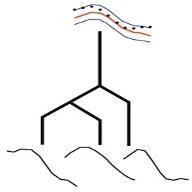
My audio etymology simulations are collected at http://ancientsounds.net
I'm also compiling, correcting and extending past posts on 🐦 (I left there before X) and 🐘 about those audio etymologies into an alphabetically-ordered blog, so that we can look up examples:
http://ancientsounds.net/blog.html
#acoustics #phonetics #audio #etymology #philology #Proto-Indo-European #EnglishLanguage #linguistics