#fossilfuels

47 posts · Last used 1d

Back to Timeline
Dragofix
@Dragofix@veganism.social · 1d ago
0
0
0
Dragofix
@Dragofix@veganism.social · 3d ago
0
0
0
Boosted by Trending Bot @trending@homestead.social
gclef
@gclef@social.vivaldi.net · 3d ago
There is an alternative to climate breakdown, political extremism, and economic tensions. A set of bold policy proposals, including hefty wealth taxes on billionaires, sharp reductions in working hours, a change in diets and a shift of investment from materially intense sectors, such as industry and mining, to education and health. If these and other measures are taken the incomes of 89% of the world’s population would double by 2100 and global heating would be kept below 2C (3.6F) over the preindustrial average. This vision provides a positive alternative to the grim projections from far-right techno extractivists, nationalists and billionaires who claim the future will inevitably bring more fossil fuels, climate disruption and inequality. https://www.theguardian.com/environment/2026/jun/04/world-inequality-lab-equality-academics-planetary-survival #Earth #ClimateDiary #GreenEnergy #FossilFuels #Climate #ClimateChange #GlobalWarming #ClimateCrisis #Nature #Science #TaxBillionaires #NoPlanetB #Economics #Politics #Health #Equality
4
0
22
Boosted by Trending Bot @trending@homestead.social
envirocomms5.wordpress.com
@envirocomms5.wordpress.com@envirocomms5.wordpress.com · 4d ago

Cars are the most heavily subsidised product on earth

When we talk about subsidies, we usually think of a check written by the government to a farmer or a tax credit for buying an electric vehicle. But if we widen our lens and look at the true cost of doing business, there is one product that stands alone as the most subsidised commodity in human history. It isn't wheat, it isn't trains, and it isn't wind turbines. It is the car.(Car in this article refers to, all passenger vehicles including "pickup trucks.") The car is a consumer product […] Hover or focus to reveal Sensitive

When we talk about subsidies, we usually think of a check written by the government to a farmer or a tax credit for buying an electric vehicle. But if we widen our lens and look at the true cost of doing business, there is one product that stands alone as the most subsidised commodity in human history.

It isn’t wheat, it isn’t trains, and it isn’t wind turbines. It is the car. (Car in this article refers to, all passenger vehicles including “pickup trucks.”)

The car is a consumer product that literally cannot function without a massive, state-funded ecosystem of external support. Strip away the highways, remove the “free” parking, ignore the unpriced health damage from pollution, and stop subsidising the fossil fuels that power it, and the car ceases to exist as a viable product. It becomes a big, heavy, useless piece of metal sitting in a driveway with nowhere to go.

If a product requires trillions of dollars of public infrastructure, medical system support, and environmental forgiveness just to operate, can it be called a “market product?” Nope! It’s a product living off an infinite line of credit provided by taxpayers.

The car is without doubt the most subsidised product in the world.

  1. The “Invisible” Subsidy: Infrastructure and Roads Most products do not require the government to build dedicated pathways for them to reach the customer. Software runs on the internet; clothes are sold in general retail spaces. The car, however, requires a public, custom-built, $50+ trillion global network of tarmac and concrete. The Highway System: In the US alone, the federal and state governments spend roughly $240 billion annually building and maintaining roads. Globally, this figure exceeds $1 trillion. While fuel taxes contribute, studies consistently show they cover only 50-60% of the actual highway system costs. The remaining deficit is filled by general income and sales taxes. Money paid by everyone regardless of car ownership. The Design Mandate: Entire cities are legally required to design themselves around the car. Zoning laws mandate wide streets, massive intersections, and grid patterns that prioritise vehicle throughput over pedestrian life. This is a structural subsidy baked into the urban DNA that costs us all. Without these roads, the car cannot move. The road is not a “side effect”; it is a mandatory component of the product’s delivery mechanism, paid for mostly by the general public, regardless of whether or not they own a car.
  2. The Parking Paradox: The Largest Hidden Transfer Urban planner Donald Shoup famously called parking “the biggest single transfer of wealth from non-drivers to drivers.” And recent 2024 data confirms he was right. [Link] “Free” Parking: When you park your car in a city centre for two hours without paying, you are receiving a direct cash transfer. That spot could generate revenue for the city (hundreds of millions annually in major metros) or be used for housing, parks, or schools. By leaving it “free,” the city is effectively subsidising car ownership. Mandated Minimums: Zoning codes force developers to build a minimum number of parking spaces for every apartment, office, and store. This increases the cost of housing and commercial real estate by thousands of dollars per unit. A person who doesn’t own a car pays more rent to subsidise the parking spots their neighbour uses. Land Waste: On-street parking consumes 20-30% of all urban land space. This is valuable real estate dedicated solely to storing private property, while other products (like bicycles or goods) compete for scraps of curb space. This is not a market price; it is a massive, hidden subsidy that makes driving appear cheaper than it actually is.
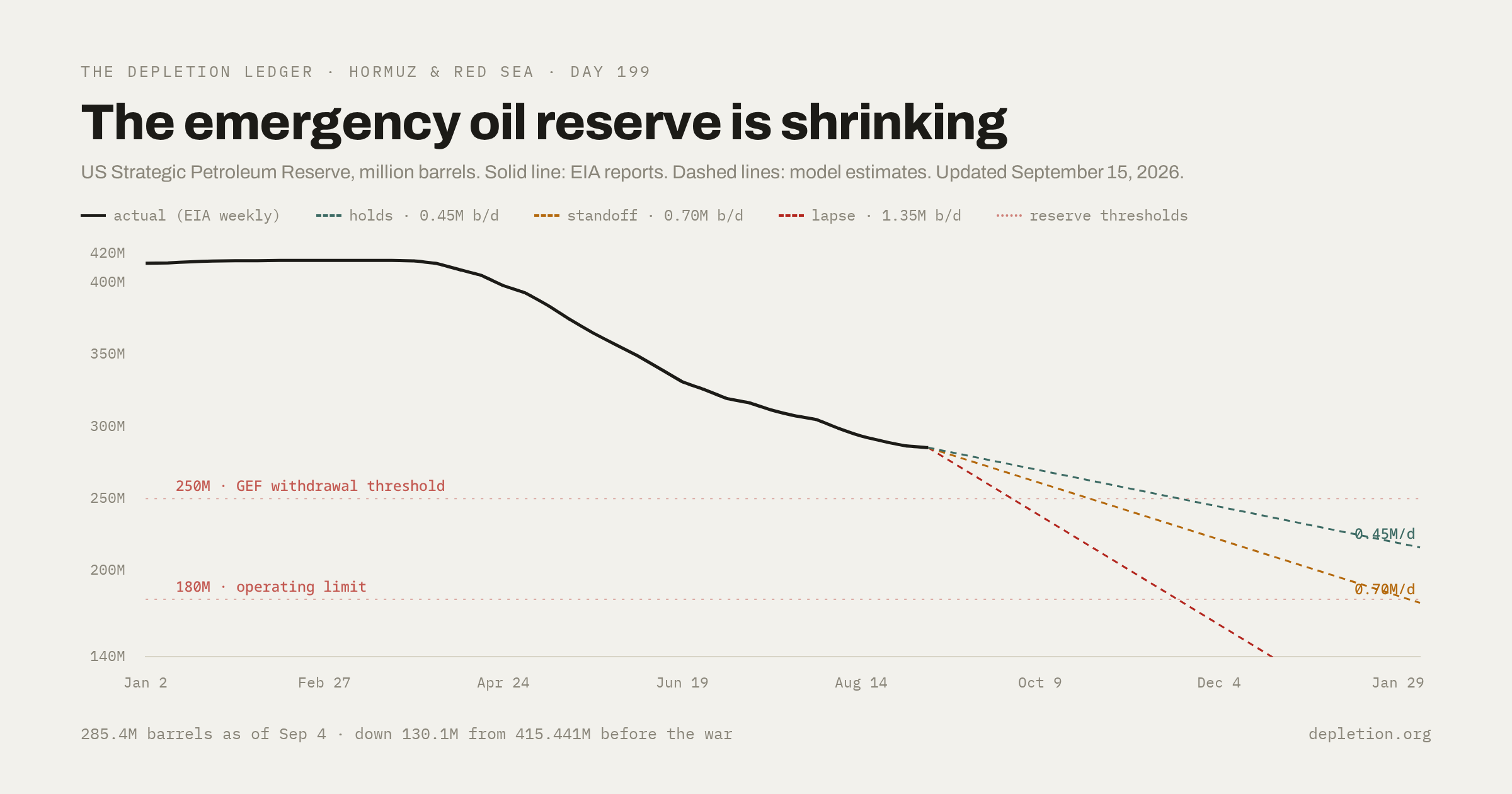
  3. The Fossil Fuel Dependence The argument that cars are independent of energy markets is false. The internal combustion engine (which still dominates the fleet) and even many EVs rely on a supply chain deeply subsidised by the state. Oil Subsidies: The IEA and IMF have estimated that global fossil fuel subsidies (including underpricing and tax breaks) range from $1.3 trillion to nearly $7 trillion annually when accounting for environmental externalities. Even using conservative estimates, the automotive sector is the primary beneficiary. [Link] Strategic Reserves: Governments maintain strategic petroleum reserves specifically to prevent oil price spikes, ensuring a stable, cheap supply for vehicles. No other product has a dedicated government stockpile to guarantee its supply chain. Military Protection of Supply Chains: A significant portion of defence budgets (estimated at $70–80 billion annually in the US alone) is dedicated to securing global oil supply lines and energy-rich regions. This military spending ensures stable, low-cost fuel for transportation, a level of state-funded physical protection for a product’s supply chain that almost no other commodity receives. [Link]

Without cheap, subsidised oil, the mass adoption of the automobile in the 20th century would never have happened, and its current usage would collapse.

  1. The Health and Environmental Tab: The “Negative” Subsidy Perhaps the most damning evidence of the car’s subsidy status is the bill that never gets sent to the driver. Air Pollution: Cars emit particulate matter, nitrogen oxides, and benzene. The World Health Organisation and various economic studies estimate that the health costs (asthma, heart disease, premature death) attributed to vehicle emissions run into the hundreds of billions globally. [Link] Traffic Accidents: In the US alone, the societal cost of traffic crashes, medical bills, lost productivity, emergency services, is roughly $340 billion per year. Insurance does not cover the full societal loss; the burden falls on public healthcare systems and families. [Link] Climate Change: The carbon footprint of personal transport is a massive negative externality. If cars had to pay the true carbon price for their emissions, the cost of ownership would skyrocket. For almost any other product, if it caused $1 trillion in health damage annually, the government would ban it or tax it into extinction. For cars, these costs are simply absorbed by the public health system and the atmosphere, and ignored by commercial media. Cars only dominate our cities because of the public crutch. If you take the car and subtract: The $1+ trillion in road infrastructure,The hundreds of billions in forgone parking revenue,The massive subsidies for fossil fuel,The billions spent treating car-related diseases and injuries,The environmental cleanup costs… The product fails. It cannot stand on its own four wheels!

No other product on earth has such a dependency on state-provided, non-market conditions. You can buy wheat without the government paving the way to your toaster, but you cannot drive a car without the entire apparatus of the modern state actively supporting it, always at a huge loss to the taxpayer.

Fuel and Road Taxes only cover a fraction of the total costs. The car is not just subsidised; it is propped up. It is the most heavily subsidised product in the world, not because it is profitable for manufacturers, but because it is too expensive to be real. It survives only because our media almost never talks about the true invoice. (I wonder if all that juicy Ad’ revenue from car companies is a factor? )

Until we price these externalities, until we charge for parking, fund roads through user fees rather than taxes, change planning laws, set a new trajectory towards offering more transit choices, and make the polluters pay for the health damage, the car will remain a phantom product, floating on a sea of public money.

  1. Next steps We have the ability to Stop The Subsidies and move them, temporarily, towards Public Transport, Micro Mobility and new infrastructure. Temporarily because once we have built the new infrastructure, it requires far less subsidies to operate.

We don’t need to do this in a reckless way that will significantly harm the less well off, we can do it in a gradual strategic way. There are endless books, papers, examples and ideas out there that explain how we can move away from Car Dependency: Revenue Recycling from Parking & Congestion Pricing  – “15-Minute City” Retrofits – Transit-First Urban Planning Zoning – Progressive Vehicle Ownership Fees …

Let’s be clear nobody sensible is proposing we ban all cars and nobody is suggesting that roads should not be paid for though taxes. The idea is to simply provide people with attractive choices/alternatives to driving and to shrink those subsides down. It will be a lot harder in some places that others, so we focus on the easy stuff first, the most dense urban areas and corridors and then add more density around rail corridors.

What matters most is we acknowledge the problem, acknowledge that its not sustainable or desirable. Car dependency is sending cities bankrupt, it is a fiscal suicide pact for municipal governments. [Link] We need our leaders to acknowledge that (Too Many) Cars Ruin Cities. Acknowledge that Cars are a lot like chocolate. A few of them are great, but too many causes real damage. Once our leaders understand this we can have a competition of ideas on how best and how fast we can move away from car dependency.

27
0
48
Dragofix
@Dragofix@veganism.social · 4d ago
0
0
0
JudithRachel
@JudithRachel@social.tchncs.de · Jun 11, 2026
Aaalsoo… ich war damals ja noch nicht auf der Welt… Ehrlich nicht! Aber mir wurde immer von diesen Autofreien Sonntagen in den 70ern erzählt… wäre das nicht, möglicherweise, vielleicht… gerade WEIL ich es gut mit dir meine… https://www.tagesschau.de/inland/innenpolitik/oelreserve-bundesregierung-100.html #fossilfuels #verkehrswende #autokorrektur #loriot
4
1
6
Dragofix
@Dragofix@veganism.social · Jun 09, 2026
0
0
0
Dragofix
@Dragofix@veganism.social · Jun 09, 2026
0
0
0
Dragofix
@Dragofix@veganism.social · Jun 09, 2026
From pledges to road maps, nations organize around fossil fuel phaseout From pledges to road maps, nations organize around fossil fuel phaseout #environment #fossilfuel #fossilfuels
0
0
0
Dragofix
@Dragofix@veganism.social · Jun 09, 2026
0
0
0
Dragofix
@Dragofix@veganism.social · Jun 04, 2026
0
0
0
Boosted by Trending Bot @trending@homestead.social
tuxom
@tuxom@climatejustice.social · Jun 02, 2026
AI boom means US is now ‘investing more’ in fossil-fuel power than China A rapid expansion of data centres across the nation is at the heart of the #US tech sector’s plans to continue “dominat[ing]” the global artificial intelligence (#AI) industry. High demand for #electricity to power these data centres has led to companies rushing to build new gas-fired power plants across the country. This trend, combined with “soaring” gas-turbine prices, drove a threefold increase in US gas‑power investment in 2025 – and the #IEA expects this to continue throughout 2026. As the chart below shows, Chinese investment in #coal- and #gas-fired power is expected to drop this year, amid domestic policy changes and the Iran war sending gas prices spiralling. Together, these trends mean the IEA expects US investment in fossil-fuelled power plants to overtake China’s in 2026. https://www.carbonbrief.org/ai-boom-means-us-is-now-investing-more-in-fossil-fuel-power-than-china/ #FossilFuels #ClimateCrisis
2
0
4
Boosted by Dragofix @Dragofix@veganism.social
palmoildetectives
@palmoildetectives@mastodonapp.uk · May 21, 2026
5
0
7
Dragofix
@Dragofix@veganism.social · May 19, 2026
Countries must back commitments to transition from fossil fuels with action https://phys.org/news/2026-05-countries-commitments-transition-fossil-fuels.html #environment #fossilfuel #fossilfuels
0
0
0
Dragofix
@Dragofix@veganism.social · May 17, 2026
0
0
3
Dragofix
@Dragofix@veganism.social · May 17, 2026
0
0
0
Dragofix
@Dragofix@veganism.social · May 15, 2026
0
0
0
Dragofix
@Dragofix@veganism.social · May 12, 2026
0
0
1
Boosted by Dragofix @Dragofix@veganism.social
nikolas
@nikolas@journa.host · May 10, 2026
4
0
10
2legged
@2legged@mastodon.ie · May 06, 2026
#KemiBadenoch says that the #UK was built on #FossilFuels. But #Ecotricity founder #DaleVince dismisses Bad Enoch's fantasy. He says that the UK was "built on slavery, on racism, on colonialism, on Empire. We abused the rest of the world to be a rich country" Dale Vince is of course entirely right. So his comments should be commonplace and unworthy of sharing. But the UK has never de-imperialised. So Dale is on his own. 😡 #ukpol #BritishEmpire #colonialism #slavery #racism #imperialism
10
5
10