#hydrology

5 posts · Last used 3d

Back to Timeline
Hans van der Kwast :qgis: @hansakwast@fosstodon.org · 3d ago
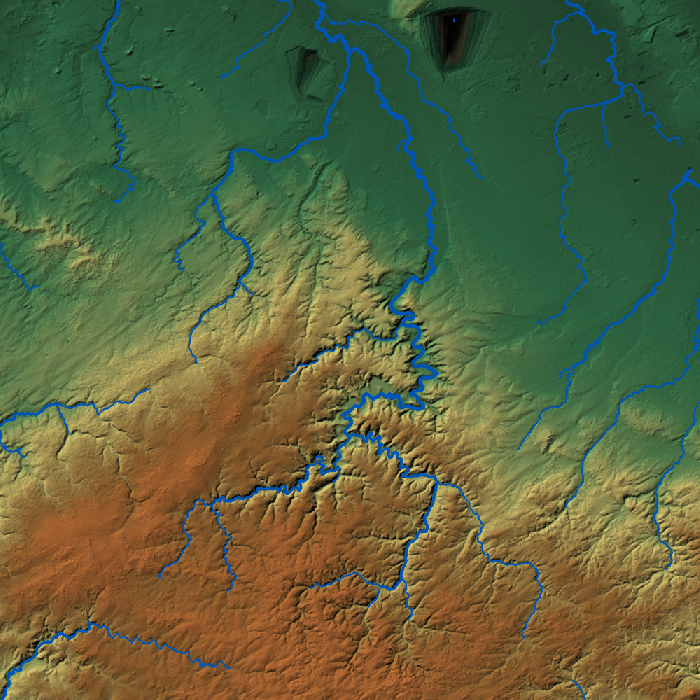
🎉We've just passed 50% of the crowdfunding goal for bringing native #hydrology tools in #qgis. Thanks for all donations so far🙏🏼 If you rely on hydrological workflows in QGIS or simply want to strengthen #OpenSource #gis, please consider supporting the effort so these tools land in QGIS 4.4. 👉 Full details & donation: https://www.qwast-gis.com/l/crowdfunding-native-qgis-tools-for-hydrology/ #OSGeo #FOSS4G @northroadgeo@fosstodon.org
0
0
0
Hans van der Kwast @qwast-gis.com@bsky.brid.gy · Jul 31, 2026
At today’s #QGIS Open Day, I launched a crowdfunding for native #hydrology tools for #QGIS. Want to support the effort? 👉️ Full details on the blog: www.qwast-gis.com/l/crowdfundi... ⏯️ Link to QGIS Open Day session: www.youtube.com/live/fkX0mZj... #GIS #hydrology #OpenSource Crowdfunding: Native QGIS Tool...
0
0
0
💧🌏 Greg Cocks @GregCocks@techhub.social · Jul 28, 2026
Busy Beavers - The Turbidity Signature Of Ecosystem Engineers At Work -- https://doi.org/10.1002/hyp.70661 <-- shared paper -- H/T @alan@techhub.social Puttock “Beavers are the quintessential ecosystem engineers. In slow-flowing streams, they create complex wetlands with ponds by building dams and canals that can positively impact biodiversity, hydrology and water quality. These activities can interchangeably capture or release sediment along the watercourse. To date this has not been quantified at the resolution of rainfall events or beaver activity. This study used 15-min frequency, sustained monitoring upstream and downstream of a newly establishing beaver wetland to measure episodic changes in water turbidity at an event resolution. Monitoring showed no significant differences between upstream and downstream turbidity over 160 days when the first pair of beavers, known not to be building dams or canals, were resident. Shortly after introduction of another beaver pair, however, dam building, burrows and canal excavations were quickly observed, resulting in the creation of a complex beaver wetland between 2021 and 2024. Monitoring over 375 days during this period showed significant differences. Downstream turbidity was significantly higher overall than upstream: 13.1 Nephelometric Turbidity Units (NTU) compared to 4.2 NTU. Stochastic spikes in downstream turbidity during the study period not recorded upstream were associated with dam building and burrowing. Overall, there was no significant difference in turbidity loads, which was at least partially explained by a reduction in discharge downstream, particularly in higher flows, during the dam building period. This demonstrates a complex system with the trapping of influent sediment, the storing of water and the periodic release of beaver wetland sediment leading to net balance in loads. These results help provide context for other studies which have used temporally discrete sampling campaigns rather than continuous high-frequency monitoring. They provide a unique insight into the downstream impacts of a rapidly developing beaver wetland over its first three and a half years in a landscape that hasn't had beavers for over 400 years…" #hydromorphic #water #hydrology #dam #beaverdam #waterquality #biodiversity #ecology #benefits #NatureBasedSolutions #Wetlands #Ecology #Biodiversity #EnvironmentalScience #Wildlife #Ecosystem #bioviversity #conservation #restoration #landscaperecovery #floodmanagement #FloodMitigation #flooding #energy #floodrisk #sustainability #wetlands #hydrography #dams #impoundment #deadwood #waterresources #landscapeengineer #benefits #vegetation #ecology #ecosystem #riversystemsstabilisation #naturalwaterregulation #resilience #valleysreborn #fisheries #invertebrates #extremeweather #floodflows #sediment #baseflow #drought #landmanagement #naturalsystems #landuse #monitoring #spatialanalysis #spatiotemporal
6
0
10
Scientific Frontline @sflorg@mastodon.social · Jul 21, 2026
Plant canopy temperature—the actual heat experienced on leaf surfaces—is increasing at a significantly faster rate than ambient air temperature. Current climate models largely rely on air temperature, leading to a systematic underestimation of the thermal stress vegetation will face as global temperatures rise. #Climatology #PlantPhysiology #Ecology #EnvironmentalScience #Hydrology #ClimateChange #sflorg https://www.sflorg.com/2026/07/as07212601.html
2
0
4
💧🌏 Greg Cocks @GregCocks@techhub.social · Jul 14, 2026
Eager Beavers - Rodents Engineer Czech Wetland Project After Years Of Human Delay [ecosystem engineers] -- https://www.theguardian.com/world/2025/feb/11/beavers-save-czech-taxpayers-by-flooding-ex-army-training-site <-- shared technical media article -- https://en.wikipedia.org/wiki/Beaver-engineered_dam_in_the_Czech_Republic <-- shared wiki technical page -- https://phys.org/news/2025-02-fine-beavers-czech-treasury-million.html <-- shared technical article -- https://youtu.be/GSTw8qmBP4Y?si=XK2Iy2pAltW91flj <-- shared video (Czech) -- H/T @ScienceGirl "We don't expect any conflict with the beaver in the next 10 years," ~ Bohumil Fiser from the Czech Nature Conservation Agency -- “For seven years, planners struggled to complete a $1.2 million wetland restoration project in the Brdy region of the Czech Republic. The goal was to build a dam that would improve water management and bring back valuable wetland habitat, but the project remained trapped in a maze of permits and approvals. Then a family of eight Eurasian beavers did what engineers had planned… without permits, machinery, or a budget. The beavers built a network of dams in almost the exact area chosen for the proposed project, naturally restoring the wetland system officials had spent years trying to create. After seeing the results, authorities decided there was little point continuing with the original human-built dam. Although some reports suggested the beavers completed the work overnight, experts say their construction likely took several weeks. The reason it seemed sudden is that the animals quietly worked away until their finished dams became impossible to miss. Beavers are known as “ecosystem engineers” because their behaviour can reshape entire environments. By cutting trees and blocking streams, they create ponds and wetlands that support countless species, including fish, amphibians, insects, birds, and mammals. Their wetlands also act as natural water reservoirs, helping during droughts, reducing flood risks, filtering water, storing carbon, and keeping landscapes wetter during wildfires… Once heavily hunted across Europe, beaver populations have been recovering thanks to conservation efforts, proving that sometimes nature can solve problems humans spend years trying to fix…" #water #hydrology #KlabavaRiver #Czech #BrdyRegion #protected #CzechRepublic #armytraining #military #beaver #Eurasianbeavers #dam #beaverdam #waterquality #restoration #biodiversity #crayfish #wetland #ecology #benefits #Beavers #NatureBasedSolutions #Wetlands #Ecology #Biodiversity #Agroforestry #EnvironmentalScience #Conservation #Wildlife #Ecosystem #bioviversity #conservation #restoration #landscaperecovery #EcosystemEngineers #nature #floodmanagement #FloodMitigation #flood #flooding #energy #floodrisk #sustainability #wetlands #hydrography #dams #impoundment #deadwood #waterresources #landscapeengineer #agriculture #benefits #vegetation #ecology #ecosystem #riversystemsstabilisation #naturalwaterregulation #resilience #drought #wildfire #valleysreborn #slowdetermination #fisheries #invertebrates #extremeweather #floodflows #sediment #baseflow #drought #landmanagement #naturalsystems #landuse #ecosystemengineers #watermanagement
9
0
12

You've seen all posts