#stanford
8 posts · Last used 10d
Today we travel back to 1972 and run MYCIN, one of the first expert systems, on the Pentium 1.
MYCIN was developed at Stanford University in the early 1970s to diagnose bacterial infections and recommend antibiotics. In 1979, it achieved a 90.9% agreement rate with Stanford experts.
The system was built around roughly 450 production rules, each representing clinical decision criteria from infectious disease experts.
So I got the code, installed CLISP on the Pentium 1 and started the consultation.
There was one small compatibility issue: Peter Norvig's implementation uses two functions not defined in modern CLISP, requires and rest2. A short shim file fixed that and the inference engine came to life.
The version available today is only a fragment of the original MYCIN. The implementation from Peter Norvig's book "Paradigms of AI Programming" contains the inference engine and just 6 rules for identifying organisms. The remaining rules for therapy, dosage and patient-specific recommendations are gone.
The original MYCIN was written in Interlisp for a DEC PDP-10 running WAITS. It was never released as open source. What survives today is essentially the shell of the system, not the knowledge it contained.
MYCIN is a monument to AI history. The way its source code was handled is both a memorial and a warning.
ELIZA (1966) survived because Weizenbaum published the code. CLIPS (1985) survived because NASA released it as open source. MYCIN (1972) did not.
Publicly funded research. Publicly funded code. Never released to the public.
This is why publicly funded research should be open source. Always!
#MYCIN #AIHistory #ExpertSystems #ArtificialIntelligence #AI #Stanford #Lisp #CLISP #NetBSD #Pentium1 #Pentium #Pentium166 #RetroComputing #vintagecomputing #OpenSource #FOSS #OpenScience #PubliclyFundedResearch #ComputerHistory #Science #Research #AcademicChatter

Replying to
#OceanWarming #ClimateChange
*Earth's Biggest Mass Extinction Reveals Chilling Parallels to Today's World*
(1/n)
#Via #JessCockerill / #Nature
https://www.sciencealert.com/earths-biggest-mass-extinction-reveals-chilling-parallels-to-todays-world
"...the findings paint a pretty clear picture.
"The bad news is, 👉we are on track for #Permian-#Triassic levels of warming in worst-case scenario projections👈,"
says #Stanford #EarthScientist #ErikSperling.
"But the good news is,...
cc @kim_harding@mastodon.scot
Agenzia Nova: Usa: morto l'ex direttore della Cia James Woolsey (2)
23 lug 05:54 - (Agenzia Nova) - Nato a Tulsa nel 1941, Woolsey era laureato a Stanford e Yale e aveva iniziato la carriera governativa nel... (Was)
Use: Former CIA director James Woolsey is dead (2)
Born in Tulsa in 1941, Woolsey was a graduate of Stanford and Yale and had begun his government career in…
#JamesWoolsey #Tulsa #Woolsey #Stanfordhttps://www.agenzianova.com/a/6a6194be3e5de0.24364982/7633149/2026-07-23/usa-morto-l-ex-direttore-della-cia-james-woolsey-2
-
Reading Didion's Slouching Towards Bethlehem.
-
In #SF for #Stanford Health Library event -- a discussion of my #memoir, #caregiving, #dementia -- that has 100 registrants.
-
Kid & partner (the inspiration behind my #bloomscrolling) started new business. Here's a link to the 1st post @plantsculptures (I left #instagram & returned only to follow them; hope this link works!) & boost their posts. Their plant sculptures are, if I may, magnificent.
Times of India | An English literature graduate Daniela Amodei on leaving OpenAI to found Anthropic: Looked crazy thing to do, but …
AI generated summary, Read the full article for complete information.
Anthropic co‑founder Daniela Amodei, an English literature graduate who previously worked at Stripe and rose to vice‑president at OpenAI, says she left OpenAI in late 2020 after a mentor reminded her that she already knew the right answer, prompting her and her brother Dario to launch Anthropic in 2021. Since then the startup has become a major rival to OpenAI, overtaking it as the world’s most valuable AI company with a $965 billion valuation following a $65 billion Series H financing round led by Altimeter Capital, Dragoneer, Greenoaks and Sequoia, and reporting a $47 billion revenue run rate largely fueled by its Claude Code AI coding assistant. Amodei also advises aspiring entrepreneurs to test co‑founder chemistry by taking a vacation together before founding a company, noting that extended off‑work time reveals whether a partnership can survive the pressures of building a startup.
Read more: https://timesofindia.indiatimes.com/technology/tech-news/an-english-literature-graduate-daniela-amodei-on-leaving-openai-to-found-anthropic-looked-crazy-thing-to-do-but-/articleshow/131460553.cms
#DanielaAmodei #OpenAI #Anthropic #Amazon #Stanford
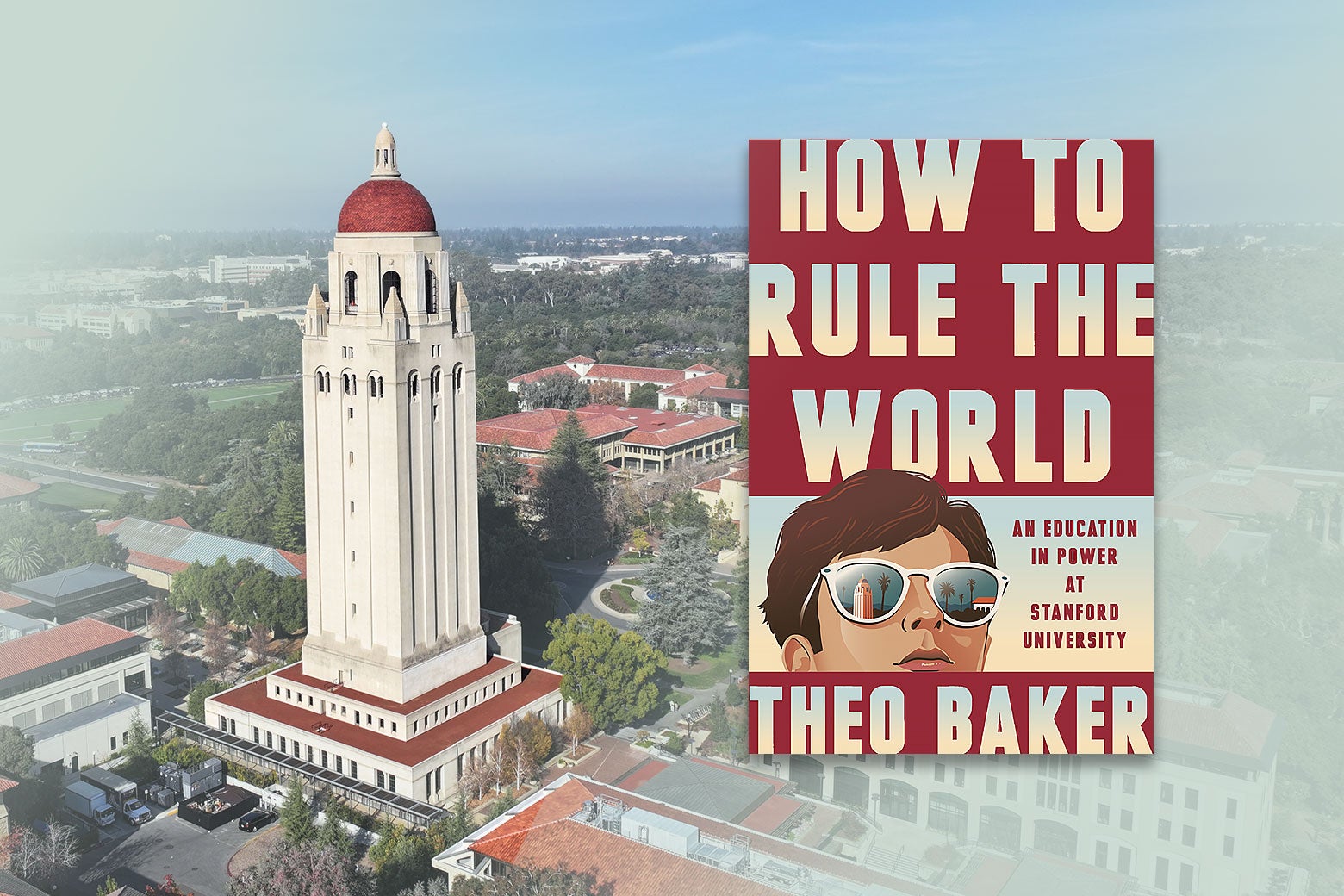
Slate Magazine | Stanford Was Once a Cradle of Innovation. What It’s Turned Into Is Something Else Entirely. by Laura Miller
AI generated summary, Read the full article for complete information.
Theo Baker’s memoir *How to Rule the World: An Education in Power at Stanford University* offers a vivid, insider’s critique of Stanford’s culture of elite entrepreneurship and unchecked ambition. Drawing on his own experience as a first‑year computer‑science student turned investigative reporter, Baker reveals how the university’s “insider” clubs market students as commodities for venture‑capital funding, how ethical corners are routinely cut, and how a climate of power‑driven competition extends from undergraduates to senior administrators—culminating in his award‑winning exposé of President Marc Tessier‑Lavigne’s mishandled research. The book intertwines personal rites of passage with a broader indictment of a system that cultivates future “masters of the universe” while silencing dissent, making Baker’s account both a compelling coming‑of‑age story and a stark horror‑story of Stanford’s hidden rot.
Read more: https://slate.com/culture/2026/05/stanford-university-theo-baker-how-to-rule-the-world-book-marc-tessier-lavigne-silicon-valley-tech-vc.html
#Stanford #TheoBaker #MarcTessier_Lavigne #highered #journalism #ScottTurow #GeorgePolk
Times of India | 'I came to US in 2016 on F-1 visa…': Reddit user shares personal journey to $300,000 job in viral post
AI generated summary, Read the full article for complete information.
A Reddit user recounts how they arrived in the United States in 2016 on an F‑1 visa to attend high school, initially struggling with English but leaving fluent after integrating with American friends. They continued to university, completed internships and part‑time work, and were subsequently recruited by a major “FAANG” tech company, earning a $300 K‑plus salary while contributing to cutting‑edge AI projects in Silicon Valley. Along the way they met and became engaged to an American partner, secured an H‑1B visa, sold a side‑startup to a U.S. firm, and earned admission to Stanford for a Master’s program that their employer is funding. The author portrays the U.S. as a land of opportunity for those who work hard, though some commenters question the story’s credibility amid broader concerns about immigration and visa restrictions.
Read more: https://timesofindia.indiatimes.com/world/us/i-came-to-us-in-2016-on-f-1-visa-reddit-user-shares-personal-journey-to-300000-job-in-viral-post/articleshow/130716868.cms
#Reddit #FAANG #SiliconValley #Stanford #H1Blottery #Americanfirm #
Boosted by @cstross@wandering.shop
Replying to on wandering.shop
@cstross@wandering.shop if you are feeling really brave...
RUN ADVENT[42,42]
Though you'd have to be really dedicated to retro gaming to want to play it. But at least I installed the #Stanford version that doesn't require caps lock stuck on to play it.
You've seen all posts