Elektrine
EN
Log in Register
Paige Chat Timeline Communities Gallery Videos Email DNS VPN Uptime Kairo
Back to Timeline
Remote

kennethbspringer.au

@kennethspringer@infosec.exchange
  • Open on infosec.exchange

Founder of snapWONDERS and builder of Vaultify — a digital media forensics platform running across clearnet, Tor, and I2P.

What I work on: metadata excavation, JPEG encoder fingerprinting (identifying camera model and encoding software from compression structure alone — no EXIF needed), steganography detection and hiding, GPS triangulation, and manipulation detection.

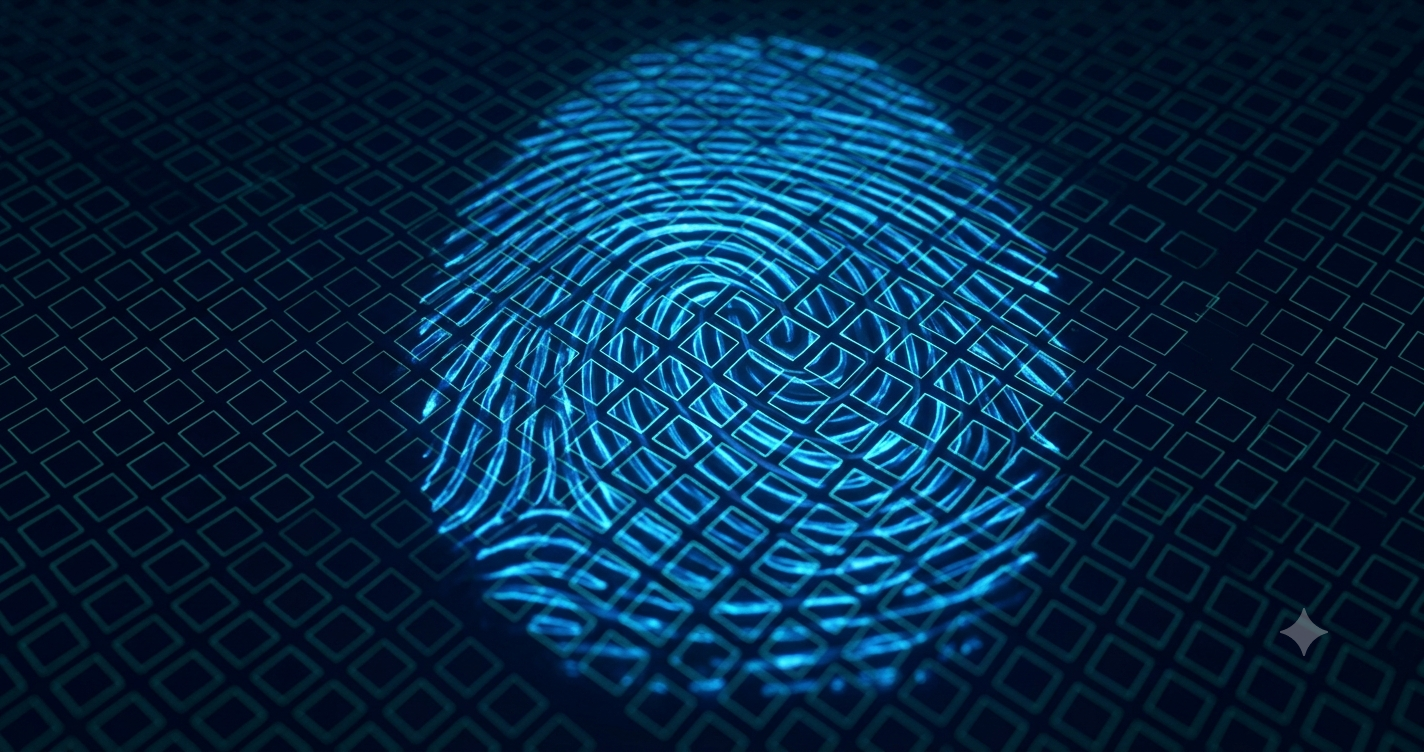
The core idea: standard metadata stripping tools remove the labels but leave the fingerprint. The quantisation tables baked into JPEG compression by camera firmware survive every strip. Vaultify finds them.

Senior full-stack developer and tech lead by day. Building snapWONDERS on the side — forensics, privacy, and deep dives into file format internals.

snapwonders.com · vaultify.snapwonders.com

#digitalforensics #OSINT #steganography #infosec #privacy #metadata

0 Followers
0 Following
14 Posts
Joined May 24, 2026
Personal website:
https://kennethbspringer.au
snapWONDERS:
https://snapWONDERS.com
snapWONDERS Vaulitfy:
https://vaultify.snapWONDERS.com

Posts

Open post
kennethspringer
kennethbspringer.au @kennethspringer@infosec.exchange · Aug 04, 2026
kennethbspringer.au
@kennethspringer@infosec.exchange

Founder of snapWONDERS and builder of Vaultify — a digital media forensics platform running across clearnet, Tor, and I2P. What I work on: metadata excavation, JPEG encoder fingerprinting (identifying camera model and encoding software from compression structure alone — no EXIF needed), steganography detection and hiding, GPS triangulation, and manipulation detection. The core idea: standard metadata stripping tools remove the labels but leave the fingerprint. The quantisation tables baked into JPEG compression by camera firmware survive every strip. Vaultify finds them. Senior full-stack developer and tech lead by day. Building snapWONDERS on the side — forensics, privacy, and deep dives into file format internals. snapwonders.com · vaultify.snapwonders.com #digitalforensics #OSINT #steganography #infosec #privacy #metadata

infosec.exchange
1930s fraud-detection mathematics, still working today — just aimed at a target it was never built for. Challenge: catch an AI-generated JPEG using nothing but a 1938 statistical law. No neural network involved. Benford's Law: in real-world numerical data, the leading digit isn't uniformly distributed — 1 shows up ~30% of the time, 9 under 5%. Holds for river lengths, electricity bills, physical constants... and, it turns out, for the AC coefficients in a JPEG's DCT blocks, if the image actually came from a capture-and-compress pipeline. I run this as one of six checks in snapWONDERS' analyse pipeline: 8×8 DCT on every block, absolute value of the AC coefficients (DC term excluded — it doesn't follow Benford), leading digit extracted, binned against the classic log10(1 + 1/d) curve, then a chi-squared goodness-of-fit test. Above threshold, it's flagged. It's not a standalone verdict — heavy resampling or repeated re-saves can trip it too, same as a genuinely synthetic image would. So it feeds a combined score alongside five other signals rather than deciding anything alone. But as a zero-training, zero-black-box check, it's a genuinely satisfying one: an accounting fraud-detection tool from 1938 has something real to say about whether a photo actually came out of a camera. Full technical breakdown (with the formula) → https://kennethbspringer.au/2026/08/05/benfords-law-detecting-ai-generated-images-without-ai/?utm_source=mastodon&utm_medium=social&utm_campaign=article-16 #digitalforensics #OSINT #infosec #aiimages #deepfake #snapWONDERS
22
0
19
0
Open post
kennethspringer
kennethbspringer.au @kennethspringer@infosec.exchange · Jul 21, 2026
kennethbspringer.au
@kennethspringer@infosec.exchange

Founder of snapWONDERS and builder of Vaultify — a digital media forensics platform running across clearnet, Tor, and I2P. What I work on: metadata excavation, JPEG encoder fingerprinting (identifying camera model and encoding software from compression structure alone — no EXIF needed), steganography detection and hiding, GPS triangulation, and manipulation detection. The core idea: standard metadata stripping tools remove the labels but leave the fingerprint. The quantisation tables baked into JPEG compression by camera firmware survive every strip. Vaultify finds them. Senior full-stack developer and tech lead by day. Building snapWONDERS on the side — forensics, privacy, and deep dives into file format internals. snapwonders.com · vaultify.snapwonders.com #digitalforensics #OSINT #steganography #infosec #privacy #metadata

infosec.exchange
Last week I wrote about how steganalysis catches naive embedding — comb patterns in pixel histograms, RS analysis asymmetry, the works. This week: what Vaultify does differently, and why "hide it well" is harder than it sounds. Naive tools embed the same amount of data into every pixel, uniformly — which is exactly the uniformity last week's detection methods key on. Vaultify runs an AI system that models how a person actually perceives an image — which parts a human eye would register a change in, and which it wouldn't — to decide how much each region can absorb. Then, separately: the payload gets encrypted first, and only the ciphertext gets embedded — a break of one layer doesn't hand over the other. No permanent claims about tomorrow's forensic research, just an honest one about resisting today's — the field doesn't stand still on either side. Full article details: https://kennethbspringer.au/2026/07/22/how-photo-steganography-works-and-how-we-push-vaultifys-limits/ #infosec #steganography #OSINT #digitalforensics
0
0
0
0
Open post
kennethspringer
kennethbspringer.au @kennethspringer@infosec.exchange · Jul 18, 2026
kennethbspringer.au
@kennethspringer@infosec.exchange

Founder of snapWONDERS and builder of Vaultify — a digital media forensics platform running across clearnet, Tor, and I2P. What I work on: metadata excavation, JPEG encoder fingerprinting (identifying camera model and encoding software from compression structure alone — no EXIF needed), steganography detection and hiding, GPS triangulation, and manipulation detection. The core idea: standard metadata stripping tools remove the labels but leave the fingerprint. The quantisation tables baked into JPEG compression by camera firmware survive every strip. Vaultify finds them. Senior full-stack developer and tech lead by day. Building snapWONDERS on the side — forensics, privacy, and deep dives into file format internals. snapwonders.com · vaultify.snapwonders.com #digitalforensics #OSINT #steganography #infosec #privacy #metadata

infosec.exchange
Replying to @SomeVeganCheeseIsOk@mastodon.social
@SomeVeganCheeseIsOk@mastodon.social ---Yeah — the costume framing's right, worth pinning down precisely: it's not obscurity if the split is authenticated and the mechanism's known, it's access control wearing steganography's coat rather than actually being it. Worth flagging a second, much more mainstream use case that fits with your scenarios listed and that's genuinely stego in form though: digital watermarking — Google's SynthID is the sharpest example. It's an imperceptible signal baked into the pixel data of every Gemini-generated image at generation time — no different in principle from a hidden payload. The interesting bit against what we said earlier about LSB dying under lossy recompression: SynthID's specifically engineered to survive it — JPEG re-encode, crop, resize, EXIF/XMP strip, all of it. Trades payload size for robustness; where LSB wants capacity, watermarking wants a signal still there after the file's been through a platform's re-encoder. Which is the practical use case: not concealment, attribution. Google pairs it with a C2PA manifest that declares "SynthID applied" at generation time — so even if someone strips the manifest entirely, the watermark bits are still sitting in the pixels, independently recoverable, telling you the file came from a pipeline that documents its own AI origin even though the paperwork's gone. The honest limit, and it's a real one: detecting it needs Google's own detector. Nothing a third party can decode from the pixels unassisted — no published algorithm, no open detector. So as a forensic examiner you can only prove "this came from a watermarking pipeline" for schemes whose owner lets you ask them. Closed system, not one you can build an independent detector for. Which is exactly the AI-generated-detection gap I mentioned chasing — SynthID's the case study for why it's hard.
0
0
0
0
Open post
kennethspringer
kennethbspringer.au @kennethspringer@infosec.exchange · Jul 18, 2026
kennethbspringer.au
@kennethspringer@infosec.exchange

Founder of snapWONDERS and builder of Vaultify — a digital media forensics platform running across clearnet, Tor, and I2P. What I work on: metadata excavation, JPEG encoder fingerprinting (identifying camera model and encoding software from compression structure alone — no EXIF needed), steganography detection and hiding, GPS triangulation, and manipulation detection. The core idea: standard metadata stripping tools remove the labels but leave the fingerprint. The quantisation tables baked into JPEG compression by camera firmware survive every strip. Vaultify finds them. Senior full-stack developer and tech lead by day. Building snapWONDERS on the side — forensics, privacy, and deep dives into file format internals. snapwonders.com · vaultify.snapwonders.com #digitalforensics #OSINT #steganography #infosec #privacy #metadata

infosec.exchange
Replying to @SomeVeganCheeseIsOk@mastodon.social
@SomeVeganCheeseIsOk@mastodon.social that flip is the interesting one, and you're right it's probably the more common case. Once the hider owns the platform, it stops being steganography at all. Nothing's hidden in the file; the file's just a key. The concealment moves into who's allowed to ask and what they get back — selective delivery, byte-identical covers, the real payload chosen server-side by who you are. Access control wearing a steganography costume. And it fits the thing I keep circling back to: the sneaky part isn't in the carrier any more, it's in the routing. Which, annoyingly for the hider, is once again a fact rather than a judgement call — two identical-looking requests get different bytes, and that's either happening or it isn't. The cleverness is all in making sure nobody's ever in a position to send both requests and compare. Also — the stego/stegosaurus thing isn't silly at all, it's exactly how the wiring got laid down for me. Years ago, first time I had to spell "steganography" and couldn't, and it isn't really a word back then, so I anchored it on the dinosaur — stego-dino-saurus, plates and all — and it's been welded in ever since. So your silly brain and my long-ago one are running the same mnemonic. lol! Go find your stegosaurus and check it for payloads; it's no less plausible than any other subject. 🦕
0
1
0
0
Open post
kennethspringer
kennethbspringer.au @kennethspringer@infosec.exchange · Jul 17, 2026
kennethbspringer.au
@kennethspringer@infosec.exchange

Founder of snapWONDERS and builder of Vaultify — a digital media forensics platform running across clearnet, Tor, and I2P. What I work on: metadata excavation, JPEG encoder fingerprinting (identifying camera model and encoding software from compression structure alone — no EXIF needed), steganography detection and hiding, GPS triangulation, and manipulation detection. The core idea: standard metadata stripping tools remove the labels but leave the fingerprint. The quantisation tables baked into JPEG compression by camera firmware survive every strip. Vaultify finds them. Senior full-stack developer and tech lead by day. Building snapWONDERS on the side — forensics, privacy, and deep dives into file format internals. snapwonders.com · vaultify.snapwonders.com #digitalforensics #OSINT #steganography #infosec #privacy #metadata

infosec.exchange
Replying to @SomeVeganCheeseIsOk@mastodon.social
Hey @SomeVeganCheeseIsOk@mastodon.social — that's the evasion side, which I do have to understand: forensics is just steganography read backwards. You learn where to look by working out where you'd hide. So I'll take your piracy example and run it the other way. The MP3 is a perfect story right up until you ask why it came back byte-identical from a host that re-encodes everything. The cover explains the file's presence; it doesn't explain the file's shape. That's the bit I find genuinely counter-intuitive. Touch the content — nudge the pixels, lean on the coefficients — and you leave a statistical smudge that's subtle and hard to prove. Don't touch the content at all, and you've left the picture pristine but the container odd: bytes sitting after the point the file logically ends. Feels like the sneakier move, but it's the easier catch, because it's not a probability any more, it's a fact. Either something's past the EOI or it isn't. Which is roughly why the file-structure side interests me more than the DCT side these days. The clever cover story and the awkward byte layout are different problems, and only one of them is a judgement call.
0
1
0
0
Open post
kennethspringer
kennethbspringer.au @kennethspringer@infosec.exchange · Jul 16, 2026
kennethbspringer.au
@kennethspringer@infosec.exchange

Founder of snapWONDERS and builder of Vaultify — a digital media forensics platform running across clearnet, Tor, and I2P. What I work on: metadata excavation, JPEG encoder fingerprinting (identifying camera model and encoding software from compression structure alone — no EXIF needed), steganography detection and hiding, GPS triangulation, and manipulation detection. The core idea: standard metadata stripping tools remove the labels but leave the fingerprint. The quantisation tables baked into JPEG compression by camera firmware survive every strip. Vaultify finds them. Senior full-stack developer and tech lead by day. Building snapWONDERS on the side — forensics, privacy, and deep dives into file format internals. snapwonders.com · vaultify.snapwonders.com #digitalforensics #OSINT #steganography #infosec #privacy #metadata

infosec.exchange
Replying to @SomeVeganCheeseIsOk@mastodon.social
@SomeVeganCheeseIsOk@mastodon.social No list yet. It just comes down to "serves the original bytes back": Wikimedia Commons, archive.org, GitHub raw, plain file hosts. And yeah, any file type — the photo's just the shiniest demo; the only real question is whether the carrier survives the trip. Keygen Church — hadn't heard of them, just looked. Organ-thrash built on old keygen/BBS worship, with coded messages hidden in each release. Not LSB steganography, but the same instinct exactly. Great pointer, cheers
0
1
0
0
Open post
kennethspringer
kennethbspringer.au @kennethspringer@infosec.exchange · Jul 15, 2026
kennethbspringer.au
@kennethspringer@infosec.exchange

Founder of snapWONDERS and builder of Vaultify — a digital media forensics platform running across clearnet, Tor, and I2P. What I work on: metadata excavation, JPEG encoder fingerprinting (identifying camera model and encoding software from compression structure alone — no EXIF needed), steganography detection and hiding, GPS triangulation, and manipulation detection. The core idea: standard metadata stripping tools remove the labels but leave the fingerprint. The quantisation tables baked into JPEG compression by camera firmware survive every strip. Vaultify finds them. Senior full-stack developer and tech lead by day. Building snapWONDERS on the side — forensics, privacy, and deep dives into file format internals. snapwonders.com · vaultify.snapwonders.com #digitalforensics #OSINT #steganography #infosec #privacy #metadata

infosec.exchange
Replying to @SomeVeganCheeseIsOk@mastodon.social
@SomeVeganCheeseIsOk@mastodon.social - Exactly right, and it's the same constraint showing up from the other direction — LSB doesn't survive lossy re-compression, so any platform that re-encodes on upload (most of them: Twitter/X, Facebook, most forums) strips a naïve payload before you'd ever get to test for it. That narrows the hunting ground to places that preserve the byte-identical original. Worth widening the target list too though — this isn't just a photo problem. Video and audio carriers work the same way (spread-spectrum/echo-hiding for audio, frame-level embedding for video), and the "does this platform re-encode on ingest" question applies just as hard, arguably harder given how aggressively video gets transcoded almost everywhere. And there's a whole separate category that doesn't touch the visual/audio content at all: appended data after a file's logical end marker (a JPEG still renders fine with an arbitrary blob tacked on after the EOI marker), data sitting in metadata fields, or padding/alignment gaps in a container's own structure. That's a genuinely different technique and a genuinely different detection problem — you're not running RS analysis or a DCT coefficient test against any of that, you're doing file-structure/carving analysis instead. Same broad question ("is something hidden here"), almost nothing else in common with content-domain steganography.
0
1
0
0
Open post
kennethspringer
kennethbspringer.au @kennethspringer@infosec.exchange · Jul 14, 2026
kennethbspringer.au
@kennethspringer@infosec.exchange

Founder of snapWONDERS and builder of Vaultify — a digital media forensics platform running across clearnet, Tor, and I2P. What I work on: metadata excavation, JPEG encoder fingerprinting (identifying camera model and encoding software from compression structure alone — no EXIF needed), steganography detection and hiding, GPS triangulation, and manipulation detection. The core idea: standard metadata stripping tools remove the labels but leave the fingerprint. The quantisation tables baked into JPEG compression by camera firmware survive every strip. Vaultify finds them. Senior full-stack developer and tech lead by day. Building snapWONDERS on the side — forensics, privacy, and deep dives into file format internals. snapwonders.com · vaultify.snapwonders.com #digitalforensics #OSINT #steganography #infosec #privacy #metadata

infosec.exchange
Replying to @SomeVeganCheeseIsOk@mastodon.social
@SomeVeganCheeseIsOk@mastodon.social - Ha, that's exactly the itch that got me building this. If you wanted to actually do it at scale rather than one photo at a time — there's a public API behind the analyse pipeline: batch-upload a session, kick off one job, poll for results, steganalysis runs alongside the rest of the forensic checks. Swagger docs are open at snapwonders.com/api, no signup wall to read them. Might genuinely go point it at a pile of random web images myself now that you've said it out loud. Also chasing real-vs-AI-generated detection as the next thing to add to the pipeline.
0
1
0
0
Open post
kennethspringer
kennethbspringer.au @kennethspringer@infosec.exchange · Jul 14, 2026
kennethbspringer.au
@kennethspringer@infosec.exchange

Founder of snapWONDERS and builder of Vaultify — a digital media forensics platform running across clearnet, Tor, and I2P. What I work on: metadata excavation, JPEG encoder fingerprinting (identifying camera model and encoding software from compression structure alone — no EXIF needed), steganography detection and hiding, GPS triangulation, and manipulation detection. The core idea: standard metadata stripping tools remove the labels but leave the fingerprint. The quantisation tables baked into JPEG compression by camera firmware survive every strip. Vaultify finds them. Senior full-stack developer and tech lead by day. Building snapWONDERS on the side — forensics, privacy, and deep dives into file format internals. snapwonders.com · vaultify.snapwonders.com #digitalforensics #OSINT #steganography #infosec #privacy #metadata

infosec.exchange
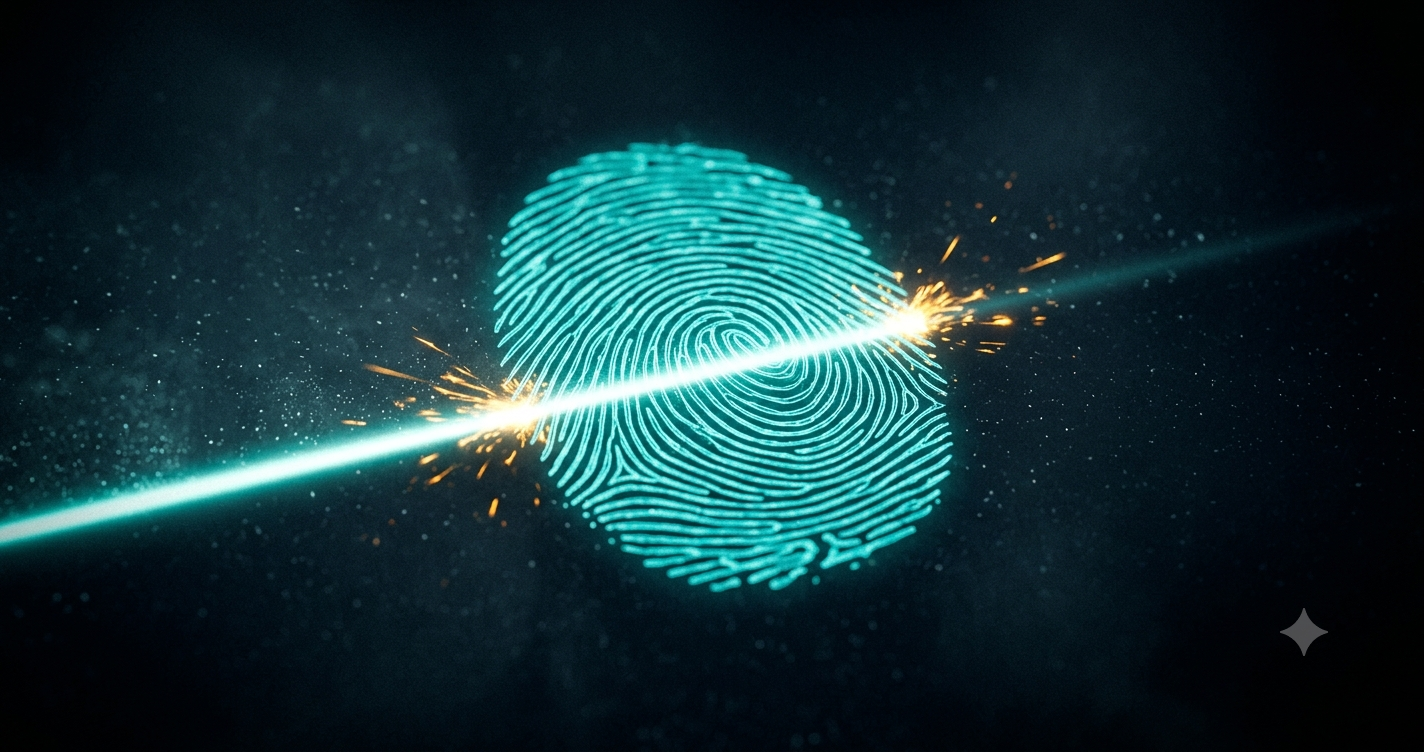
Your steganography tool says the image is clean. Here's what the chi-square test says. LSB replacement — the simplest and most common form of image steganography — leaves three separate statistical fingerprints: a comb pattern in pixel value pair histograms, a measurable shift toward true randomness in the LSB plane, and a broken correlation between the LSB and the rest of the image that real camera noise doesn't break. RS analysis turns the first two into a quantitative test — partition the image into pixel groups, measure local smoothness, flip the LSBs and measure again. Unmodified images hold a specific symmetry between the resulting group counts. Embedding breaks that symmetry in proportion to how much payload was hidden, which means RS analysis doesn't just detect presence — it estimates embedding rate. DCT-domain hiding (embedding inside JPEG's compressed frequency coefficients rather than raw pixels) is a harder target for spatial tests like RS analysis, but coefficient-histogram and calibration-based methods exist specifically for that domain. Harder to detect has never meant undetectable — every generation of "harder to catch" embedding gets a purpose-built detection method eventually. No single test proves presence or absence with certainty in either direction — noisy or heavily compressed images can trip a naive test into a false positive, and adaptive embedding can sit under one test's threshold. That's why real steganalysis combines multiple independent signals and reports confidence, not a binary verdict. snapWONDERS runs this as part of its forensic pipeline. Full breakdown: https://kennethbspringer.au/building-steganography-detection-statistical-analysis/?utm_source=mastodon&utm_medium=social&utm_campaign=article-12 #OSINT #digitalforensics #infosec #steganography
1
1
0
0
Open post
kennethspringer
kennethbspringer.au @kennethspringer@infosec.exchange · Jul 09, 2026
kennethbspringer.au
@kennethspringer@infosec.exchange

Founder of snapWONDERS and builder of Vaultify — a digital media forensics platform running across clearnet, Tor, and I2P. What I work on: metadata excavation, JPEG encoder fingerprinting (identifying camera model and encoding software from compression structure alone — no EXIF needed), steganography detection and hiding, GPS triangulation, and manipulation detection. The core idea: standard metadata stripping tools remove the labels but leave the fingerprint. The quantisation tables baked into JPEG compression by camera firmware survive every strip. Vaultify finds them. Senior full-stack developer and tech lead by day. Building snapWONDERS on the side — forensics, privacy, and deep dives into file format internals. snapwonders.com · vaultify.snapwonders.com #digitalforensics #OSINT #steganography #infosec #privacy #metadata

infosec.exchange
Replying to @dbattistella@mstdn.ca
@dbattistella@mstdn.ca - that’s such an interesting angle to think about. If you look at the bigger picture, it’s not just the plow—even agriculture itself wasn’t invented by a single person or a single nation. Thousands of years ago, different cultures all over the world independently figured out how to farm, domesticate plants, and harvest crops simply because they needed to feed and support their own communities. Human survival has always been a team effort. In fact I had to look up where this statement from Jeff Bezos came from. And he goes further about the steam engine too. Curious, and checking whether the steam engine was invented by a single person comes down to another collective invention. And seeking further found "While James Watt is the "famous genius" in history textbooks, he did not invent the steam engine out of nowhere—he merely added one major improvement to a technology that communities of engineers had been building together for over a century". Your viewpoint was insightful.
1
1
0
0
Open post
kennethspringer
kennethbspringer.au @kennethspringer@infosec.exchange · Jul 09, 2026
kennethbspringer.au
@kennethspringer@infosec.exchange

Founder of snapWONDERS and builder of Vaultify — a digital media forensics platform running across clearnet, Tor, and I2P. What I work on: metadata excavation, JPEG encoder fingerprinting (identifying camera model and encoding software from compression structure alone — no EXIF needed), steganography detection and hiding, GPS triangulation, and manipulation detection. The core idea: standard metadata stripping tools remove the labels but leave the fingerprint. The quantisation tables baked into JPEG compression by camera firmware survive every strip. Vaultify finds them. Senior full-stack developer and tech lead by day. Building snapWONDERS on the side — forensics, privacy, and deep dives into file format internals. snapwonders.com · vaultify.snapwonders.com #digitalforensics #OSINT #steganography #infosec #privacy #metadata

infosec.exchange
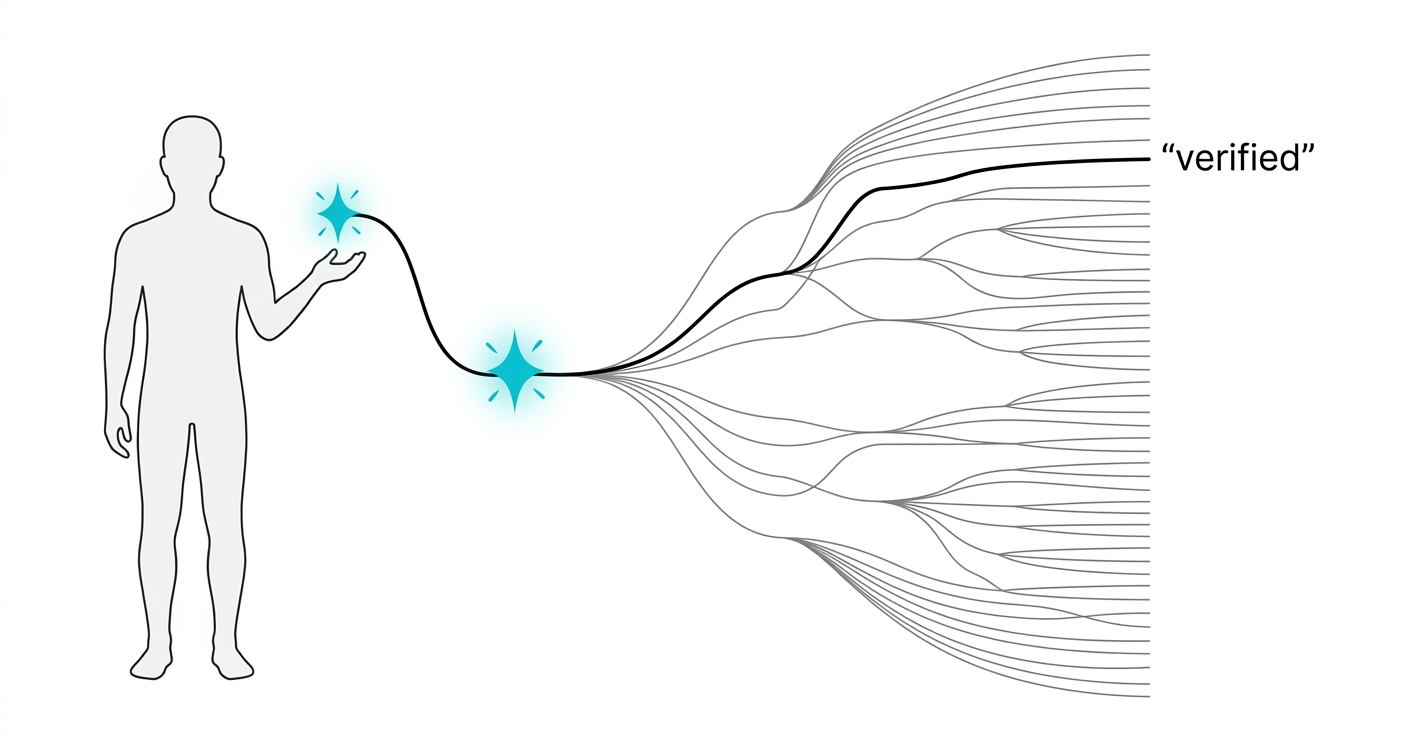
You've seen the little "cr" badge start showing up on images. Do you know what it actually proves — and what it doesn't? It's not a vibe check. It's a COSE-signed certificate chain sitting inside a JUMBF box in a JPEG's APP11 segment (or a PNG caBX chunk). The signature proves two things and only two: which tool or camera signed the manifest, and that the pixel data hasn't changed since. That's the entire guarantee. The digitalSourceType field inside that manifest is what tells LinkedIn's badge to say "AI-generated" instead of "camera capture" — trainedAlgorithmicMedia vs digitalCapture. LinkedIn reads it. X is rolling out the same read. Where it stops: no manifest, no proof either way. The chain says nothing about who the human behind the tool is, and most images in circulation still carry no manifest at all — that's normal, not suspicious. snapWONDERS validates the full chain on every upload — signature, hash binding, source type — and feeds it into the authenticity score. Full breakdown: https://kennethbspringer.au/2026/07/09/think-twice-before-claiming-ai-work-as-your-own-what-c2pa-content-credentials-prove/?utm_source=mastodon&utm_medium=social&utm_campaign=article-10 #OSINT #digitalforensics #infosec #C2PA #contentauthenticity
0
0
0
0
Open post
kennethspringer
kennethbspringer.au @kennethspringer@infosec.exchange · Jun 11, 2026
kennethbspringer.au
@kennethspringer@infosec.exchange

Founder of snapWONDERS and builder of Vaultify — a digital media forensics platform running across clearnet, Tor, and I2P. What I work on: metadata excavation, JPEG encoder fingerprinting (identifying camera model and encoding software from compression structure alone — no EXIF needed), steganography detection and hiding, GPS triangulation, and manipulation detection. The core idea: standard metadata stripping tools remove the labels but leave the fingerprint. The quantisation tables baked into JPEG compression by camera firmware survive every strip. Vaultify finds them. Senior full-stack developer and tech lead by day. Building snapWONDERS on the side — forensics, privacy, and deep dives into file format internals. snapwonders.com · vaultify.snapwonders.com #digitalforensics #OSINT #steganography #infosec #privacy #metadata

infosec.exchange
Replying to @stragu@mastodon.indie.host
@stragu@mastodon.indie.host these are good questions and having metrics to validate the claim that "things are better" will be a bit of a challenge. If AI learnings are based on things created by humans, and through all that big data, it can determine what materials makes a general success, including novelty. It's almost like AI can be predictive in what's the next step to increase the chances that it will be a winner. On the flip side, if I may add my personal viewpoint/experience with AI is that AI seems to be amplifying abilities of those that use it. Using the earlier comment reference to "no Stephen King yet". I truly believe it's a matter of when. BUT... Yes there is a but... imagine if Stephen King wielded AI to amplify his abilities? That would push Stephen's work to the next level and beyond... AI will need to continue to learn from great writers...
0
0
0
0
Open post
kennethspringer
kennethbspringer.au @kennethspringer@infosec.exchange · Jun 11, 2026
kennethbspringer.au
@kennethspringer@infosec.exchange

Founder of snapWONDERS and builder of Vaultify — a digital media forensics platform running across clearnet, Tor, and I2P. What I work on: metadata excavation, JPEG encoder fingerprinting (identifying camera model and encoding software from compression structure alone — no EXIF needed), steganography detection and hiding, GPS triangulation, and manipulation detection. The core idea: standard metadata stripping tools remove the labels but leave the fingerprint. The quantisation tables baked into JPEG compression by camera firmware survive every strip. Vaultify finds them. Senior full-stack developer and tech lead by day. Building snapWONDERS on the side — forensics, privacy, and deep dives into file format internals. snapwonders.com · vaultify.snapwonders.com #digitalforensics #OSINT #steganography #infosec #privacy #metadata

infosec.exchange
Replying to @lritter@mastodon.gamedev.place
@lritter@mastodon.gamedev.place — no Stephen King just yet, but perhaps a matter of a when? Reminds me perhaps like early robotics, which were often pretty clunky, awkward, and even a bit funny—more prototypes than practical tools—AI has come a long way from those rough beginnings. These days, it's genuinely outstanding and extraordinary, but there's still a fair way to go. I reckon the real push will come from where the big bucks are being invested and the potential to cash in on it. When there's serious money to be made, development speeds up and takes us even closer to real, game-changing AI.
0
1
1
0
Open post
kennethspringer
kennethbspringer.au @kennethspringer@infosec.exchange · Jun 10, 2026
kennethbspringer.au
@kennethspringer@infosec.exchange

Founder of snapWONDERS and builder of Vaultify — a digital media forensics platform running across clearnet, Tor, and I2P. What I work on: metadata excavation, JPEG encoder fingerprinting (identifying camera model and encoding software from compression structure alone — no EXIF needed), steganography detection and hiding, GPS triangulation, and manipulation detection. The core idea: standard metadata stripping tools remove the labels but leave the fingerprint. The quantisation tables baked into JPEG compression by camera firmware survive every strip. Vaultify finds them. Senior full-stack developer and tech lead by day. Building snapWONDERS on the side — forensics, privacy, and deep dives into file format internals. snapwonders.com · vaultify.snapwonders.com #digitalforensics #OSINT #steganography #infosec #privacy #metadata

infosec.exchange
Replying to @thomasfuchs@hachyderm.io
@thomasfuchs@hachyderm.io given the rate of "improvements" with AI, it is likely that the quality would improve in time to come. Be interesting to see if the content surpasses that on a human and said banners would proudly be displayed. On the flip side, with media generation does have some marker added to the media content. While it doesn't say "proudly made with AI" but the intent to let you know it was AI generated was there. These are done by visible Markers: Logos, icons, or "Imagined with AI" text placed directly on images, easily cropped or edited out. Invisible Watermarks: Embedded digital signatures (e.g., Google’s SynthID) that remain detectable even after edits. Metadata Tags: Technical data like C2PA or IPTC embedded in image files, describing how the image was created; these can be stripped easily. This is happening now with Google (Gemini/Imagen): SynthID OpenAI (DALL-E 3): Content credentials in metadata Meta (Facebook/Instagram): Visible tags, invisible watermarks, C2PA metadata Stable Diffusion (via Meta/Inria): Open-source invisible watermarking (Stable Signature) Maybe not long to go until articles and books will follow suite? Your thoughts?
1
2
0
0

Remote instance

infosec.exchange
Open on original server

Media

313k7r1n3
Elektrine

Tor hidden service

elekhj7afj4qnrr4yd3bkzslsyo5jgfxw3orgjkhlcxifueodybyiiad.onion

Platform

  • Email
  • Chat
  • Timeline
  • Communities
  • VPN
  • DNS

Company

  • About
  • Contact
  • FAQ

Legal

  • Terms of Service
  • Privacy Policy
  • Warrant Canary
  • Lite (no JS)
  • VPN Policy
  • Source code

Support

  • support@elektrine.com
  • Report Security Issue
Mail client setup IMAP mail.elektrine.com:993 POP3 mail.elektrine.com:995 SMTP mail.elektrine.com:465
© 2026 Elektrine. All rights reserved. Server: 21:08:47 UTC