#star

16 posts · Last used 14d

Back to Timeline
サファイア・ネオ @Sapphire_neo@mastodon.com.pl · Jul 28, 2026
星々に想いを Думки про зірки 夜空を見上げ Подивіться на нічне небо https://note.com/poison_raika/n/n6c7ce96eaa5b <> #look #night #sky #star #entrusting #wish #never #come #true #quietly #falling #asleep #single #flower #awakens #head #morning #walk #rising #caught
0
0
1
サファイア・ネオ @Sapphire_neo@mastodon.com.pl · Jul 28, 2026
遠い高み  далеких висот 目指せ、空高く光輝く星を、 Цілься в сяючу зірку високо в небі, https://note.com/poison_raika/n/nca5e61f3ace8 <> #star #shine #sky #never #able #beautiful #you #fly #away #Chase #light #catch #run
0
0
1
grobi @grobi@defcon.social · Jul 22, 2026
Replying to on defcon.social

2026 July 23

The Large Magellanic Cloud

Explanation: Have you ever seen another galaxy with your own eyes? The featured image shows the Large Magellanic Cloud (or LMC), one of the closest neighbors of our Milky Way. If you are anywhere south of latitude 20° N (but the further south, the better), you can see it with the naked eye if you go to a dark sky location, away from big cities and light polution. It is a dwarf irregular galaxy about 163,000 light-years away, and a member of our Local Group of galaxies. Despite being small, with a total mass approximately equivalent to 10% - 20% of the mass of the Milky Way, the LMC is very actively forming stars. This is likely due to the gravitational push and pull of tides caused by the Milky Way on the LMC. Astronomers predict that it will collide with the Milky Way in in about 2 billion years. https://www.youcanseethemilkyway.com/blog/what-galaxies-can-you-see-with-the-naked-eye https://www.instagram.com/p/Da5kVNrkSwA/?img_index=1 https://en.wikipedia.org/wiki/Large_Magellanic_Cloud https://imagine.gsfc.nasa.gov/science/objects/milkyway1.html https://oceanservice.noaa.gov/facts/latitude.html https://www.astronomy.com/observing/take-a-closer-look-at-the-large-magellanic-cloud/ https://esahubble.org/wordbank/dwarf-galaxy/ https://science.nasa.gov/universe/galaxies/types/#irregular-galaxies http://www.atlasoftheuniverse.com/localgr.html https://apod.nasa.gov/apod/ap260219.html https://iopscience.iop.org/article/10.3847/1538-4357/ad1f58/pdf https://images.unsplash.com/photo-1687425961065-46efeb465c66 https://www.sci.news/astronomy/large-magellanic-cloud-milky-way-collision-06788.html

https://apod.nasa.gov/apod/ap260723.html

#space #astronomy #science #astrophotography #photography #nature #star #NASA #apod

6
1
0
grobi @grobi@defcon.social · Jul 27, 2026
Replying to @grobi@defcon.social

2026 July 28

Barnards Loop over Twin Volcanoes

Explanation: What's connecting these two volcanoes? In ancient folklore, the two volcanoes, Parinacota (left) and Pomerape (right), are connected by representing a mythical prince and princess who engaged in a forbidden romance. Beneath the ground, the two peaks are not known to be connected by a common pool of hot magma, and neither volcano has erupted in the past 1000 years. Above the ground, there is usually nothing in the sky that connects them -- except if you use careful timing and look from a specific location. The featured well-planned image was captured from Bolivia in mid-April with a series of camera exposures taken on the same day and from the same location. Then, Barnard's Loop appeared to connect the volcanic peaks. Also visible in the image is the Orion Nebula in the center, the star Betelgeuse on the right, and the Rosette Nebula on the upper right. https://youtu.be/Jwpue5dq_wA?t=171 https://qhapaqnan.qiri.cl/ancient-legends/ https://science.nasa.gov/earth/earth-observatory/parinacota-volcano-south-america-76144/ https://apod.nasa.gov/apod/ap051002.html https://www.instagram.com/p/DXpszcJCY6n/ https://en.wikipedia.org/wiki/Bolivia https://apod.nasa.gov/apod/ap090224.html https://science.nasa.gov/universe/what-is-betelgeuse-inside-the-strange-volatile-star/ https://science.nasa.gov/universe/what-is-betelgeuse-inside-the-strange-volatile-star/ https://apod.nasa.gov/apod/ap200329.html

https://apod.nasa.gov/apod/ap260728.html

#space #astronomy #science #astrophotography #photography #nature #star #NASA #apod

24
1
12
サファイア・ネオ @Sapphire_neo@mastodon.com.pl · Jul 23, 2026
0
0
1
サファイア・ネオ @Sapphire_neo@mastodon.com.pl · Jul 21, 2026
0
0
1
TKSST • seethis.tv 🌈🪐✨ @tksst@fediscience.org · Jul 17, 2026
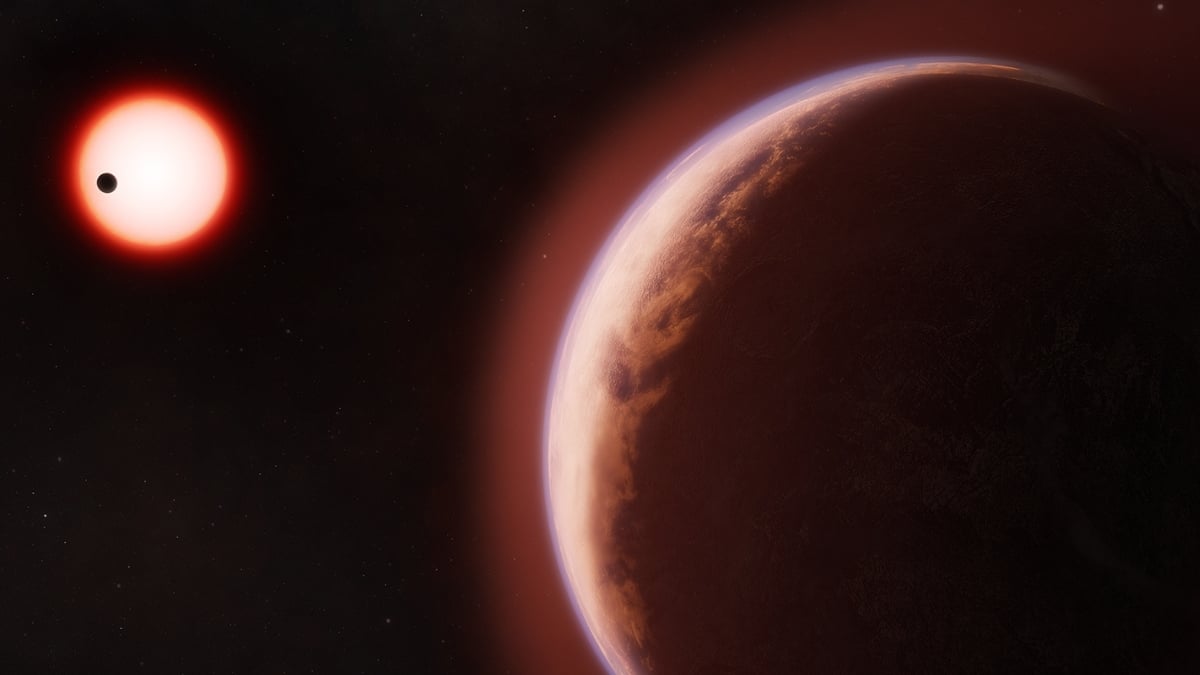
💁🏻‍♀️ TIL: 🪐🔭 For the first time, astronomers have detected an #atmosphere on a rocky #planet in the habitable zone of another #star. The super-Earth LHS 1140 b, located 50 light years away, shows signs of a #helium dominated atmosphere escaping into #space. Researchers used the WINERED #spectrograph at Las Campanas Observatory to make the ground-based #discovery. 👉 https://www.sciencealert.com/for-the-first-time-astronomers-have-detected-an-atmosphere-around-a-rocky-planet-in-the-habitable-zone #astronomy #exoplanet #superearth #habitablezone #spectrograph #lhs1140b #science #reddwarf #harvard
1
0
1
サファイア・ネオ @Sapphire_neo@mastodon.com.pl · Jul 16, 2026
0
0
1
Funeo Funekawa @funefune_kyoto@mstdn.tokyocameraclub.com · Jun 01, 2026
Boosted by Gerrit 🇪🇺🌍🍉🔻 @gvenema@fairmove.net
43
1
15
サファイア・ネオ @Sapphire_neo@mastodon.com.pl · Feb 27, 2026
君の名は? Як тебе звати? 春の日だった、庭に綺麗な花が咲いた朝。 Того дня небо було яскраво-блакитним. https://note.com/poison_raika/n/n440f915171c7 <> #spring #morning #beautiful #flower #bloomed #garden #eyes #corner #soft #star #eflect #like #drawn #breeze #sky #clear #blue #fragile #touch #would #break #track #dream #reality #alive #dead #heaven #earth #curse #magic #slipped
0
0
1

You've seen all posts