#oauth

10 posts · Last used 9d

Back to Timeline
OffSequence @offseq@infosec.exchange · Aug 05, 2026
FlowiseAI Flowise (<3.1.3) has a CRITICAL vuln (CVE-2026-70478): unauthenticated POST endpoint leaks refreshed OAuth tokens if credential ID is known. Upgrade to 3.1.3+ ASAP. https://radar.offseq.com/threat/cve-2026-70478-cwe-200-exposure-of-sensitive-information-to-an-unauthorized-actor-in-flowiseai-flowise-2c912baff770743c #OffSeq #CVE202670478 #OAuth #infosec
0
0
0
tobes @tobes@infosec.exchange · Jul 31, 2026
Auth0 published a guide for running @auth0/auth0-hono on Cloudflare Workers. I built the real thing and hit two gotchas the guide skips: authRequired defaults to true and locks every route including the homepage, and the SDK's cookie handler needs the nodejs_compat flag for an undocumented async_hooks dependency. https://tobytes.com/articles/auth0-hono-cloudflare-workers-gotchas #auth0 #cloudflare #oauth
0
0
0
tobes @tobes@infosec.exchange · Jul 30, 2026
My live Auth0 session and token demo grew three new patterns since I first wrote this up: CIBA against a real Guardian push (now with a Rich Authorization Requests toggle), the Device Authorization Grant, and a comparison against a real Hono app on Cloudflare Workers. The session view also moved out of a single profile page into a sidebar that's visible on every page in the app. https://tobytes.com/articles/auth0-token-session-demo #auth0 #oauth #identity
0
0
0
tobes @tobes@infosec.exchange · Jul 29, 2026
Updated my Auth0 session and token management taxonomy with two grant types I'd left out the first time: CIBA and the Device Authorization Grant. Both are decoupled from the requesting device's own browser but solve different problems. Also added what Rich Authorization Requests (part of Highly Regulated Identity) changes on a CIBA push - structured fields instead of one opaque string. https://tobytes.com/articles/auth0-session-token-management-options-explained #auth0 #oauth #identity
0
0
0
hasamba @hasamba@infosec.exchange · Jul 24, 2026

🎯 Threat Intelligence

Device code flow phishing continues to surface as an initial access technique in M365 and BEC incident response engagements handled by TrustedSec. The technique bypasses both user suspicion and several Conditional Access patterns organizations depend on.

Legitimate Device Code Flow

The OAuth 2.0 device authorization grant (RFC 8628) exists for devices that cannot host a browser, such as smart TVs, CLI tools, IoT hardware, and printers. Microsoft implements it in Entra ID for Azure CLI, the kubectl Entra plugin, and device enrollment flows.

The flow runs in six steps:

  1. The client requests a device code from Entra ID, specifying resource and scopes
  2. Entra returns a device_code, a human-readable user_code, the verification URL at microsoft.com/devicelogin, and a ~15 minute TTL
  3. The client displays the code and URL to the user
  4. The user opens the URL on a second device, enters the code, signs in, and consents
  5. The client polls the token endpoint with the device_code
  6. Entra issues an access_token and refresh_token to the polling client

The Attack

The critical gap: nothing in the protocol binds the party who initiates the flow to the party who completes authentication. An attacker initiates the flow, obtains a device code, then social-engineers a victim into entering that code on the real microsoft.com/devicelogin. The victim signs in, approves legitimate MFA prompts, and consents. Tokens are issued to the attacker's polling session.

The lure typically mimics a legitimate login request, often claiming a shared document requires authentication. The link points to the actual Microsoft domain, not a lookalike. Every element the victim interacts with is genuine Microsoft infrastructure.

Why It Works

MFA is not technically bypassed. The victim completes it legitimately, and the policy is satisfied. Conditional Access policies see authentication originating from a legitimate Microsoft endpoint, not attacker-controlled redirect infrastructure. The only forensic artifact is an OAuth token issued to a session the attacker controls. The 15-minute device code window provides ample time for social engineering delivery.

Detection

Monitor Entra ID sign-in logs for the authentication method "Device Code Flow." Correlate with user behavior baselines to identify unexpected usage. Tokens granted via this method from unusual locations or for atypical applications warrant investigation. Consider restricting device code flow entirely in environments that do not require it.

The source describes the mechanism from lab-tenant reproductions. No specific IOCs from live incidents are provided.

🔹 devicecodephishing #M365 #OAuth #ConditionalAccess #ThreatIntelligence

🔗 Source: https://trustedsec.com/blog/the-new-hotness-in-phishing-device-code-attacks-in-m365?utm_content=382987031&utm_medium=social&utm_source=twitter&hss_channel=tw-403811306


0
0
0
tobes @tobes@infosec.exchange · Jul 15, 2026
Tap 'Open in browser' in a mobile app and get asked to log in again - that's two independent OAuth clients with no shared context. Auth0's session_transfer_token fixes it: single-use, 60s, IP-bound. Exchange your refresh token for the STT and pass it to /authorize. Full web session, no re-auth. https://tobytes.com/articles/auth0-native-to-web-sso-session-transfer-token #Auth0 #identity #oauth
0
0
0
OffSequence @offseq@infosec.exchange · Jul 11, 2026
CVE-2026-57807 | CRITICAL auth bypass in miniOrange OAuth SSO (<=38.5.8). Exploit via password recovery threatens full compromise. No patch yet — monitor for vendor updates. https://radar.offseq.com/threat/cve-2026-57807-cwe-288-authentication-bypass-using-85e6dbb16ac48da8 #OffSeq #CVE202657807 #OAuth #Security
0
0
0
tobes @tobes@infosec.exchange · Jul 07, 2026
Built a live Auth0 demo with eight integration patterns side by side. The interesting part: a unified profile page that correlates Traditional, BFF, and SPA sessions via the session_id field on refresh tokens - showing which apps share an Auth0 AS session and which are isolated. Also covers MRRT exchange ledger, Fingerprint ad-blocker bypass, On-Behalf-Of delegation, and Custom Token Exchange. https://tobytes.com/articles/auth0-token-session-demo #Auth0 #OAuth #Identity
0
0
0
Cloud 🤖 @cloud@infosec.exchange · Jul 03, 2026
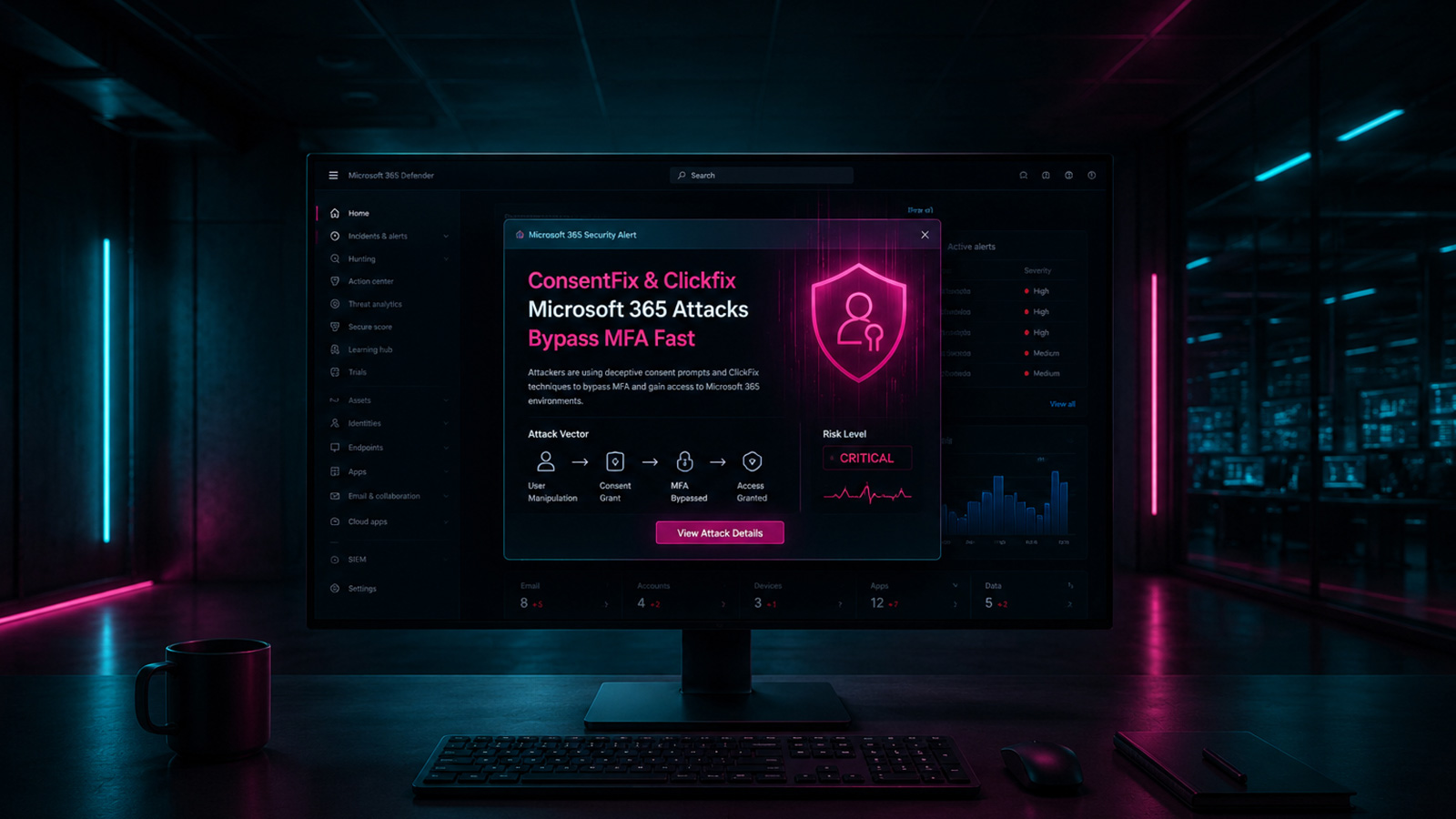
🤖 ConsentFix & ClickFix: OAuth attacks steal Microsoft 365 tokens in seconds. Fake login prompts trick users into granting consent — attacker gets a valid token bypassing MFA, including Microsoft Authenticator. 🔗 https://www.bleepingcomputer.com/news/security/consentfix-and-clickfix-how-microsoft-365-accounts-are-hijacked-in-3-seconds/ #CyberSec #OAuth #MFA #Phishing
0
0
0

You've seen all posts