If you use Markov chains for music, be sure to also look into hidden Markov models (HMMs) and hierarchical HMMs (HHMMs). You'll find some intense math if you look them up, but that math is for people trying to infer the models from empirical data. If you set the parameters manually then HMMs and HHMMs are very simple to implement and have good musical potential.
Remote
Nathan Ho
@ho@sonomu.club
427
Followers
67
Following
42
Posts
Joined November 03, 2022
site:
Posts
Burial imitation, all synthesized except vocals
In repetitive music, the "singletons," the sounds you use only once in the piece, are emphasized. (In dance music, well-done risers & transitions can be the difference between great and mediocre tracks.) In non-repetitive music, the sounds you reuse are emphasized.
Working on a Burial style imitation
I am attempting to make fully synthesized nu metal in SuperCollider.
Bridges 2026 proceedings are up (and open access). Lots of beautiful research on math+art and also my paper, "Polytwisters: 4D Curved Shapes from Polyhedra and Hopf Fibration."
Placing meshes with random positions, orientations, and sizes so that no two of them overlap on camera. Rust program takes in a mesh, brute-forces random positions and orientations checking against projection onto the camera, and exports transformation data to Blender.
I've never cared for the thing in music tech academia where they make experimental controllers that just deliver MIDI or OSC to a software synth. If you go through the trouble to build new hardware, take full advantage of the physical world and make the sound source acoustic or electromechanical.
Thanks to those who showed up to the listening party! I WAS in fact there but due to a Bandcamp bug the chatbox was completely blank the whole time for me, so my assumption was that nobody said anything! And of course I could not reply to the questions people directed towards me.
Fitting for an album about hidden messages! Anyway, if you have a question just ask me.
Replying to
@arturo@col.social
@arturo@col.social Thank you! All the code for the project is open source, links below. The website is written in TypeScript with a GLSL raytracer doing the rendering. The paper figures were made with a CLI Rust application to generate mesh data which I import using Blender Python scripts.
https://github.com/polytwisters/polytwisters.com
https://github.com/polytwisters/polytwister-mesher
Replying to
@paul@post.lurk.org
@paul@post.lurk.org I'm not much a branded tee guy but I will think about more merch options, good idea. For now you can buy any Christmas mug that says "Ho Ho Ho," which is all officially licensed Nathan Ho merchandise.
Replying to
@avlap2@mastodon.nl
@avlap2@mastodon.nl The first run was $180 per book but honestly I lowballed myself. The next run will probably be pricier.
Replying to
@avlap2@mastodon.nl
@avlap2@mastodon.nl 3OP's handling the shipping part of things, but I believe the answer is yes (1/2 of 3OP is based in France).
Replying to
@ho@sonomu.club
Wow. The books are already sold out. I underestimated the demand. I will consider doing another edition then. No promises, as it takes me 5+ hours to make each one.
Replying to
@ho@sonomu.club
Available on digital.
Also as a 250-page hardcover book containing the complete SuperCollider source code. There's a hole cut it in it for a USB stick containing 48k/24 WAV files.
All books are hand-bound by me, so this run is extremely limited.
NATHAN HO - STEGANOGRAPHY
11 tracks, 30 minutes. Pure SuperCollider. No samples or external software.
Out now on 3OP.
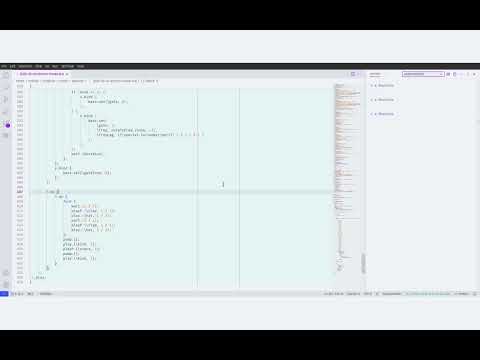
Electro house in SuperCollider
My paper, "Polytwisters: 4D Curved Shapes from Polyhedra and Hopf Fibration," was accepted for Bridges 2026, a conference on mathematical art. It's my first ever conference paper, written for fun as an independent researcher.
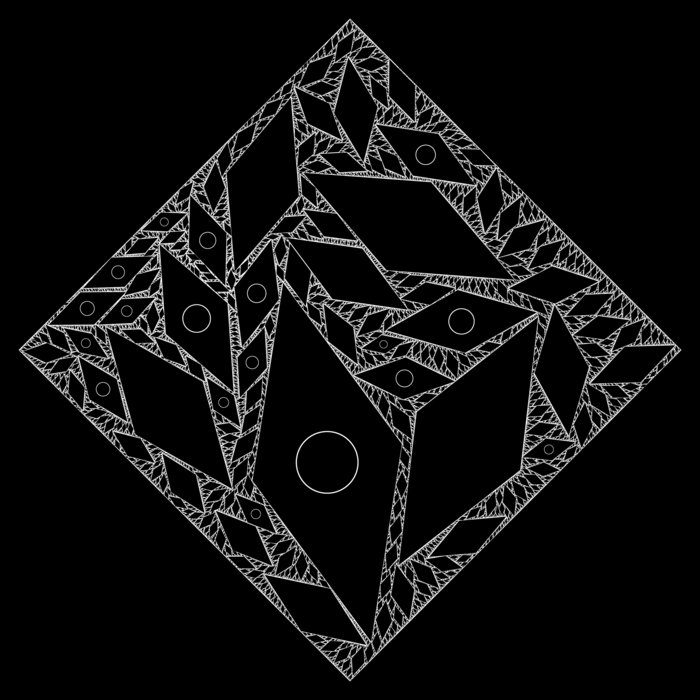
The paper is pretty technical but I have tried to design it to be visually appealing to someone without a math background. Below is one figure. You can check out the paper's attached website here: https://polytwisters.com/
I will no longer be collaborating with @Lime@post.lurk.org after @GuyBirkin@post.lurk.org's heinous "put the Lime in the Ho-conut, you drink 'em both up" pun in the Bandcamp listening party. I do recommend you listen to our album though: https://evel.bandcamp.com/album/striations-of-grace
Replying to
@chorist@merveilles.town
Replying to
@nnirror@post.lurk.org
@nnirror @williamfields This is a good paper but I'm not sure I would have gone with a discrete compression algorithm for a continuous signal. Windowed RMS -> STFT of RMS signal -> spectral flatness or spectral entropy might be easier to implement and more CPU-friendly with similar results.
It's so neat that the Audio Engineering Society has a committee dedicated to Diversity, Equity, and Inclusion! I wonder if they're aware if it costs $595/year to subscribe to the AES journal or $33 to purchase a single paper.
I used to be more disdainful of musicians who do Content Creator stuff, slickly edited short videos and whatnot. It felt very fake to me. But as I've met peers & colleagues who do that, I've learned that a lot of them are pretty genuine about it. "Influencer" tics might be a turn-off for me, but I shouldn't judge people who legitimately love being entertainers.
Beautiful paper on Topological Data Analysis on audio, revealing a helix shape that coils around each octave for bright, pitched tones. Spectrogram -> Pearson correlation of frequency bins -> place points in 3D space for each freq bin so higher correlations are closer together -> connect adjacent bins with edges.
Loris Cro (Zig Software Foundation) on moderation in programming communities
Book me for your wedding, birthday party, mitzvah, or corporate event! Classic jams and top 40 hits.
Replying to
@paul@post.lurk.org
@paul Thanks Paul! Kinda the opposite of gluing independent patches -- rather I focused on the morph types themselves, like LFO modulation turning into an audible oscillator, or a random swarm of oscillators coalescing into a chord THX-style. So less "make patch A, make patch B, interpolate parameters" and more "make patch A, add new ugens & knobs ad hoc until it can morph into patch B." Whether A&B are just parameters or totally different signal chains depends on what kind of morph.
Replying to
@chorist@merveilles.town
@chorist Well yes, at a low level it's just parameter interp, but I was talking more at a high level where adding a new "stage" to the morph requires adding a new signal path and timing all the automation signals correctly. This isn't really a single synthesis patch, but rather a bunch of them playing tag team, and that's the source of awkwardness.
Replying to
@ho@sonomu.club
Idea here was to produce the impression of a single patch smoothly morphing between many different sounds, using a variety of different kinds of morphing. Think Escher's Metamorphosis prints. It's pretty rough since it's my first time attempting this, and it's reaaaalllllly awkward to do in SuperCollider. Dunno how other environments compare.
Morph study
Streaming for a bit @synth_def@www.youtube.com
AFAICT EQ filters, dynamic range compressors, frequency modulation, and vocoders were originally developed or at least refined for radio/military applications. But there are many more developments in telecommunications that, to my knowledge, haven't caught on specifically as tools for musicians.
Replying to
@reillypascal@hachyderm.io
@reillypascal@hachyderm.io Oh huh, \fixed must be a newer feature. Should be the same.
Replying to
@reillypascal@hachyderm.io
@reillypascal@hachyderm.io Two opinionated LilyPond tips:
- Use \language "english" at the top of each file so you can type note names as cs/cf/css/cff. Unless you really like typing Dutch note names (cis/ces/cisis/ceses).
- The manual recommends \relative mode but I'm not a fan. I prefer "absolute" mode (the default one), and use \transpose to deal with unwieldy octaves.
I haven't been DSP blogging much, and the reason is perfectionism. I'm holding these projects to unrealistic standards. I am posting this to hold myself accountable: there will be one in the next month.
Nathan Ho - Kodok Ngorek
track for Algorithmic Art Assembly v3.0 compilation