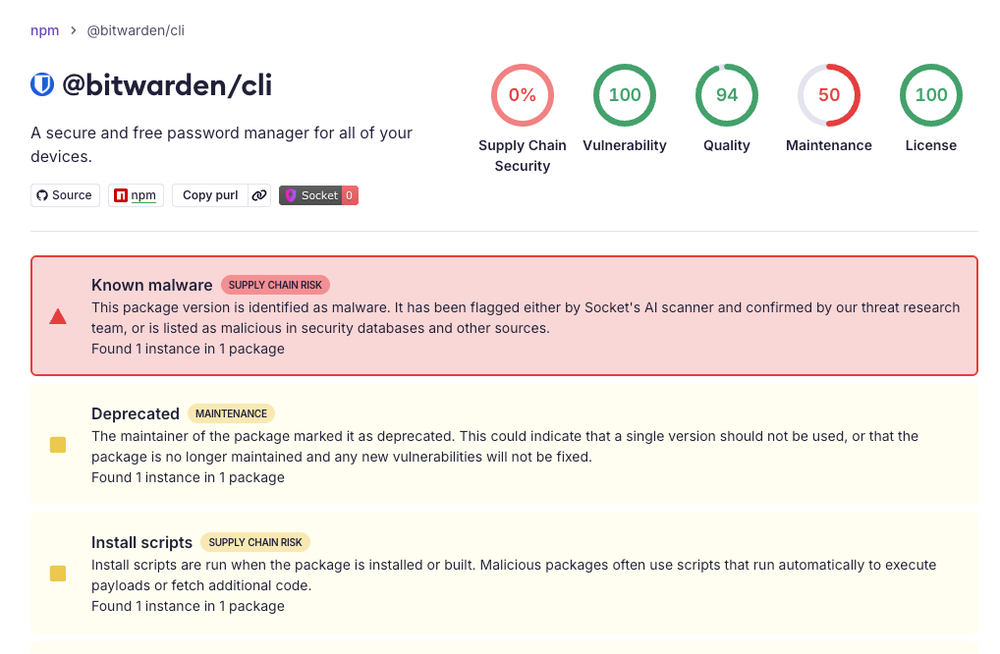
🚨 Active supply chain attack on AsyncAPI. Five malicious @asyncapi packages were published to npm today, shipped through the project's own GitHub Actions trusted publishing pipeline after an attacker poisoned a commit on the next branch.
Affected versions:
@asyncapi/generator@3.3.1
@asyncapi/generator-helpers@1.1.1
@asyncapi/generator-components@0.7.1
@asyncapi/specs@6.11.2
@asyncapi/specs@6.11.2-alpha.1
The first three were published within a six-second window at 07:10 UTC. AsyncAPI tooling runs on developer machines and CI runners, so the implant executes directly in build environments.
Socket AI Scanner flagged all five releases as confirmed malware. This is a multi-stage botnet loader:
• On load, an obfuscated implant spawns a detached, hidden Node.js child process
• The child downloads an 8.25 MB encrypted payload (sync.js) from IPFS into a fake "NodeJS" data directory on Windows, macOS, or Linux
• HKDF-SHA256 key derivation and AES-256-GCM decryption unpack the final stage
• That final stage is Miasma, a 3.09 MB command framework with REST-based C2 plus fallback channels over Nostr, IPFS, Ethereum RPC, and BitTorrent DHT
• 12 command types, including ShellExec, file get/put/delete, payload updates, and self-destruct
• Persists on Linux via a systemd user service (miasma-monitor.service)
The campaign config is labeled "miasma-train-p1" and contains dormant modules for PyPI, RubyGems, and Cargo. npm appears to be phase one.
If you installed any affected version, treat the host as potentially compromised. Check for detached Node.js processes with ignored stdio, connections to 85[.]137[.]53[.]71, fake NodeJS directories, and the miasma-monitor service. Pin to known-good versions and audit lockfiles before your next install.
Full analysis: https://socket.dev/blog/asyncapi-supply-chain-attack
Developing story...