Masks 101
https://healthselfdefense.substack.com/p/masks-101
Masks, like much of public health, is a collective action and shared responsibility. In societies where collective mask wearing is not established, people often do not want to stand out and wear a mask. But many, many people would wear masks if they knew that the majority would be wearing them too; In this case, people can get superior protection and do not risk standing out.
Our governments have given confusing messages about the use of masks, even outright discouraging it. We believe there should be widespread support from our governments, pro-mask campaigns and education, and free and affordable availability of quality masks. We still hope that these are actions taken in the future, but the failure of governments has left the responsibility on us. The good news is that each person who wears a mask has an impact on reducing transmission that is bigger than themselves.
The more interactions that contain masks, the better! So let’s do what we can to encourage mask-wearing and make it accessible. Every mask used has an impact! Masks work!
For a mask to work there are 2 things to take into account:
-
Filter quality
-
The airtight seal of the mask
The quality of the filter has to do with the percentage of protection it gives, and the seal is what makes it work. If you use a good quality glove but it has a hole, the quality of the glove takes a backseat. The same goes for masks, they must have a good seal, which means no leaks on the sides.
There are 4 types of masks:
-
Fabric
-
Surgical
-
Respirators
4.P100
Any mask is better than none, but understanding the basic science of how respirators work to protect you can help you understand why quality is so important.
-
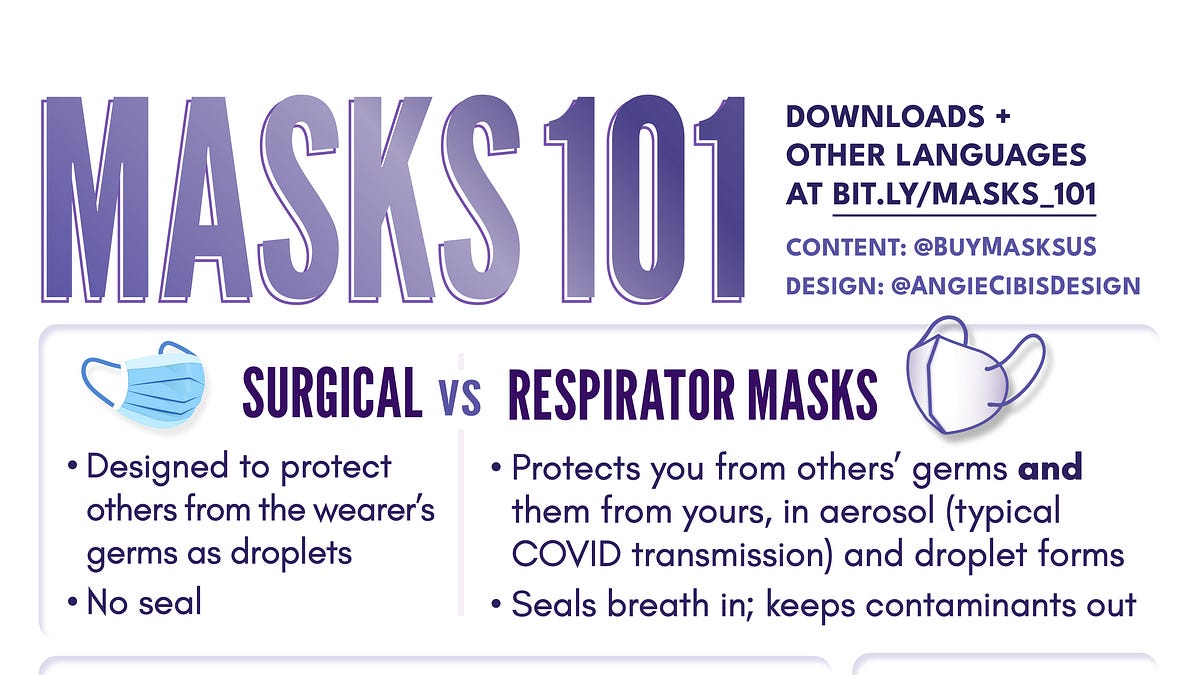
Fabric: only protect droplets NOT aerosols
-
Surgical: they usually have 3 layers, they protect against droplets and aerosols but because they are very large they create enormous leaks and their effectiveness is low; Maximum safe use is around 3-4 hours
-
Respirators: they usually have 5 layers, they protect from droplets and aerosols; They can be used for a maximum of 25 hours (not all in a row). There are two things that are special about respirators. First, they create an airtight seal around your mouth and nose. Second, they have a static charge that attracts small particles and filters them effectively. Surgical masks have some of that static charge and filter out some particles, but they don’t create a seal. Cloth masks do not have this charge and do not have a good seal either. By filtering aerosols, respirators also filter pollution, smoke and dust.
Certified Reusable Masks: It may be discouraging to learn that reusable cloth masks are not effective in protecting us from aerosols, but there are other options to reduce your waste! Several brands make reusable respirators with disposable filters, such as Flo Mask and Envo Mask. These masks are very expensive, but they are designed to be reused and look really cool.
Valved masks release unfiltered exhaled air and increase the risk of contagion if you are sick, so valveless respirators offer better protection for the community.
- P100: they are the ones that best protect us against fires, tear gas...
Cloth masks don’t offer very much protection at all.
Respirators provide the best protection against Covid, and they work against all variants.
There’s vast differences in inward mask leakage between N95s and other masks (and remember: leakage is what we’re trying to avoid):
· Fabric 70%
· Surgical 44.2%
· KN95 16.1%
· N95: only 0.6% (this is why they’re the safest!)
It only takes a very small amount of viral aerosol to cause an infection, which is why respirators are the best masks for preventing infection because they filter the air best and offer the best seal.
Adding a head strap (like this one) to KNP95 (OR FPP2) earloop masks can make them fit more like an NP95 (OR FPP2). It helps create a tighter seal and also takes pressure off your ears.
What does the airtight seal have to do with masks? When it is winter and you breathe and see a white color of some kind of smoke, those are your aerosols; we propagate them continuously. They move like smoke and can remain there for hours. Can’t you smell the cigarette smoke of a person smoking 5 meters away from you? The same thing happens with aerosols.
While a surgical mask can physically block airborne particles that can cause other diseases, without that seal around your face, you’d likely still breathe COVID (and other airborne diseases) if you’re exposed, and you’d be spreading it to others if you have it.
#MaskUp #WearAMask #CovidRealist #CovidIsAirbone #LongCovid #YallMasking #DisabledLiberation #DisabilityJustice #HealthSelfDefense
.