#bookingcom

5 posts · Last used 3d

I fell for the Booking.com WhatsApp scam today. There has apparently been a #databreach at #bookingcom, which provides a little bit of truth to this "please verify your credit card now" scam. They knew my name, my phone number, the hotel I was staying at and the exact dates. That, a little bit of time pressure and a potential quick solution got me. I managed to complete the flow once, which according to them would only reserve the money. Something failed and I tried again. This time they were asking me to confirm the balance of my account for verification, and that finally triggered the alert for me. I'm retrospect, the originating WhatsApp number was located in Brazil (which was not where I was going). The name didn't match the name of the Hotel representative in the message, and the website's title was Booking.com, which didn't match the actual host name in the URL. I didn't notice. Approach shit like this calmly and don't let people push you to rash decisions. #Phishing #scam

153
0
166
0
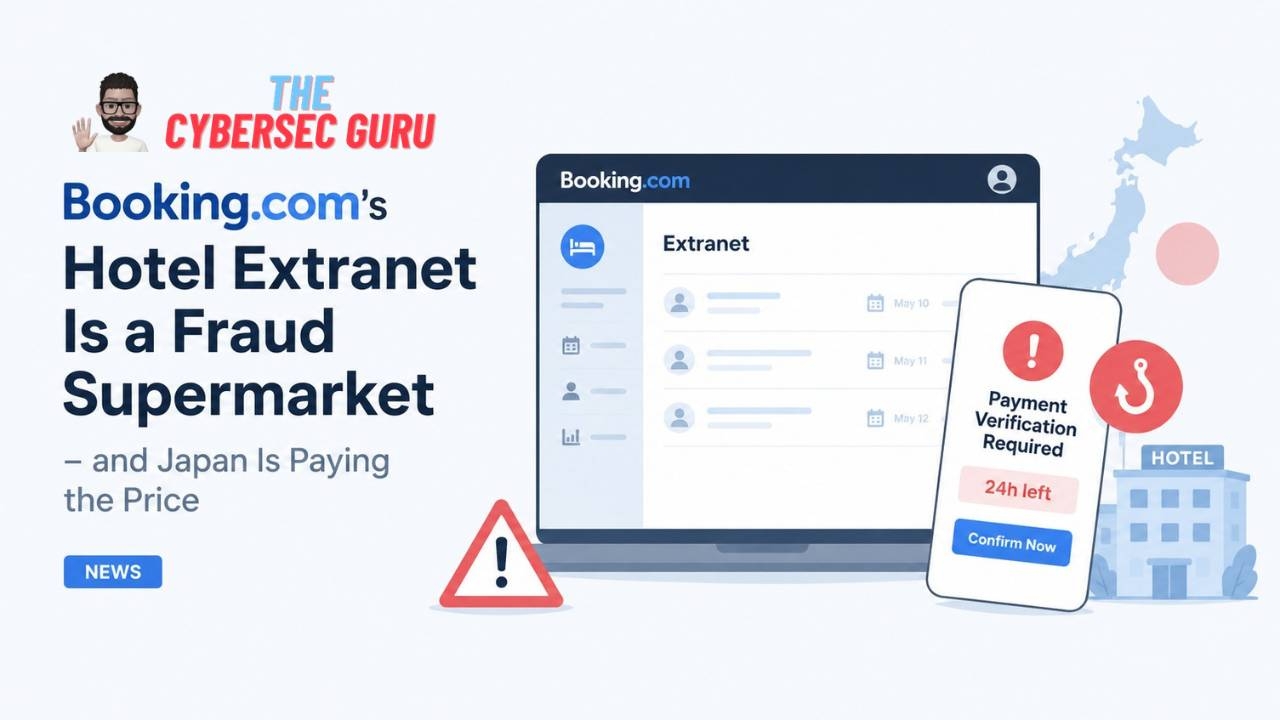
🚨 If you booked a hotel through Booking.com, read this before your next trip. Attackers are hijacking hotel partner accounts, stealing REAL reservation details, and sending convincing phishing messages with your hotel name, booking ID, and check-in date. Booking.com has suffered a major data breach. This isn't a fake database leak. It's a supply chain security failure affecting hotels worldwide, with Japan currently at the center of the latest campaign. 🔒 Learn: • How the attack works • Why hotel extranet accounts are being targeted • How guest data is abused • Red flags to spot before you lose your money Read the full investigation 👇 https://thecybersecguru.com/news/booking-coms-hotel-extranet-is-a-fraud-supermarket-and-japan-is-paying-the-price/ #CyberSecurity #CyberNews #BookingCom #Phishing #DataBreach #TravelSecurity #CyberAttack #InfoSec #ThreatIntel #ScamAlert #HotelSecurity #OSINT #Malware #ClickFix #Ransomware #Travel #Japan
4
0
14
0
The Guardian | ‘It’s like stealing’: Palestinian family’s seized property listed on Booking.com by Julian Borger in al-Khader, West Bank AI generated summary, Read the full article for complete information. Mohammad al‑Sbeih’s family farm on a hillside south of Bethlehem was seized in 1982 for the Israeli settlement of Neve Daniel, and the land now hosts a holiday rental advertised on Booking.com as an “ideal for outdoor gatherings” property with garden and terrace views. A new report by the US‑based advocacy group Ekō identified 41 Booking.com listings in 14 illegal Israeli settlements across the occupied West Bank, arguing that such rentals violate the Fourth Geneva Convention and the Rome Statute, and that the listings may constitute money‑laundering under Dutch law. The report cites the International Court of Justice’s 2024 advisory opinion that deems the settlements illegal, and notes that the European Legal Support Center’s criminal complaint against Booking.com’s Dutch parent is under review. While Booking.com claims it does not decide where people can travel and points to a small disclaimer about “conflict‑affected areas,” the company has faced criticism for profiting from rentals on land seized from Palestinians, a grievance echoed by al‑Sbeih, who says his family’s legal battles have repeatedly failed to restore their property. Read more: https://www.theguardian.com/world/2026/may/14/palestinian-family-seized-property-listed-on-booking-com #Bookingcom #RomeStatute #MohammadalSbeih
0
0
4
0
Feed: All Latest | ‘Reservation Hijacking’ Scams Target Travelers. Here’s How to Stay Safe by David Nield AI generated summary, Read the full article for complete information. “Reservation hijacking” scams target travelers by exploiting details from a legitimate booking—often obtained through data breaches like the April 2026 Booking.com hack, which exposed names, email addresses, phone numbers and reservation information. Scammers impersonate hotel, airline, car‑rental or spa staff, contacting victims via phone, email or text and demanding urgent payments (bank transfers, credit‑card details) that go to the fraudsters instead of the true provider. To stay safe, verify the caller’s identity through official channels, never share payment information outside the platform that made the reservation, use the company’s own apps or website for communication, and protect all travel accounts with strong, unique passwords and two‑factor authentication. Read more: https://www.wired.com/story/reservation-hijacks-scam-safety-tips/ #Bookingcom #tips
0
0
2
0
You've seen all posts