
Conversation (17)
Open reply Open reply
Danpiker
@Danpiker@mathstodon.xyz ·Mar 25
Open reply Open reply 
Craig S. Kaplan
@csk@mathstodon.xyz ·Mar 25
Thread reply
@Danpiker@mathstodon.xyz I've seen still images (and animations?) of these sorts of arrangements of squares for a while now, and I still don't believe they're possible.
4
2
0
Open reply Open reply 
Grégoire Locqueville
@glocq@mathstodon.xyz ·Mar 25
Thread reply
@csk@mathstodon.xyz
The following toot helped me figure it out partially:
https://mathstodon.xyz/@Danpiker/116289884555776002
You need a tiling of the plane by "anchor" quadrilaterals,
where an anchor quadrilateral is a quadrilateral Q such that there is a continuum of squares whose each side passes through a vertex of Q.
Now I'm not sure yet what characterizes anchor squares...
@Danpiker@mathstodon.xyz
1
1
0
Open reply Open reply
Danpiker
@Danpiker@mathstodon.xyz ·Mar 26
Thread reply
@glocq@mathstodon.xyz @csk@mathstodon.xyz these quadrilaterals need to be both equidiagonal and orthodiagonal.
1
0
0
Open reply Open reply 
Bathsheba Grossman
@bathsheba@mathstodon.xyz ·Mar 27
Thread reply
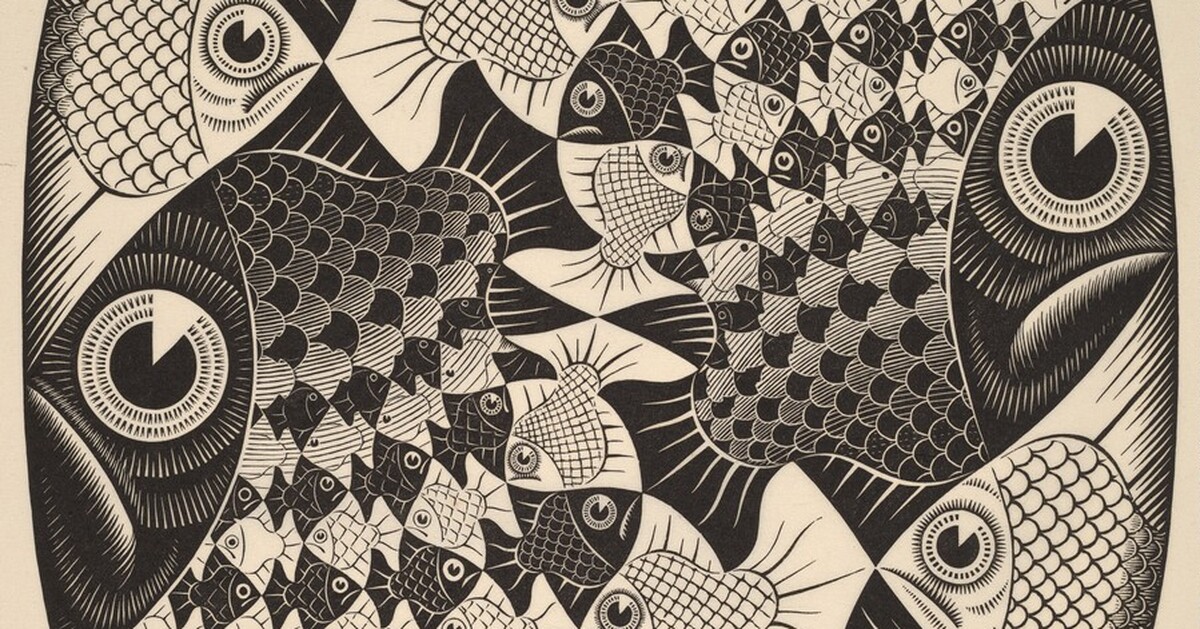
I feel like this is related to
https://www.nga.gov/artworks/61279-fish-and-scales
0
0
0
Open reply Open reply 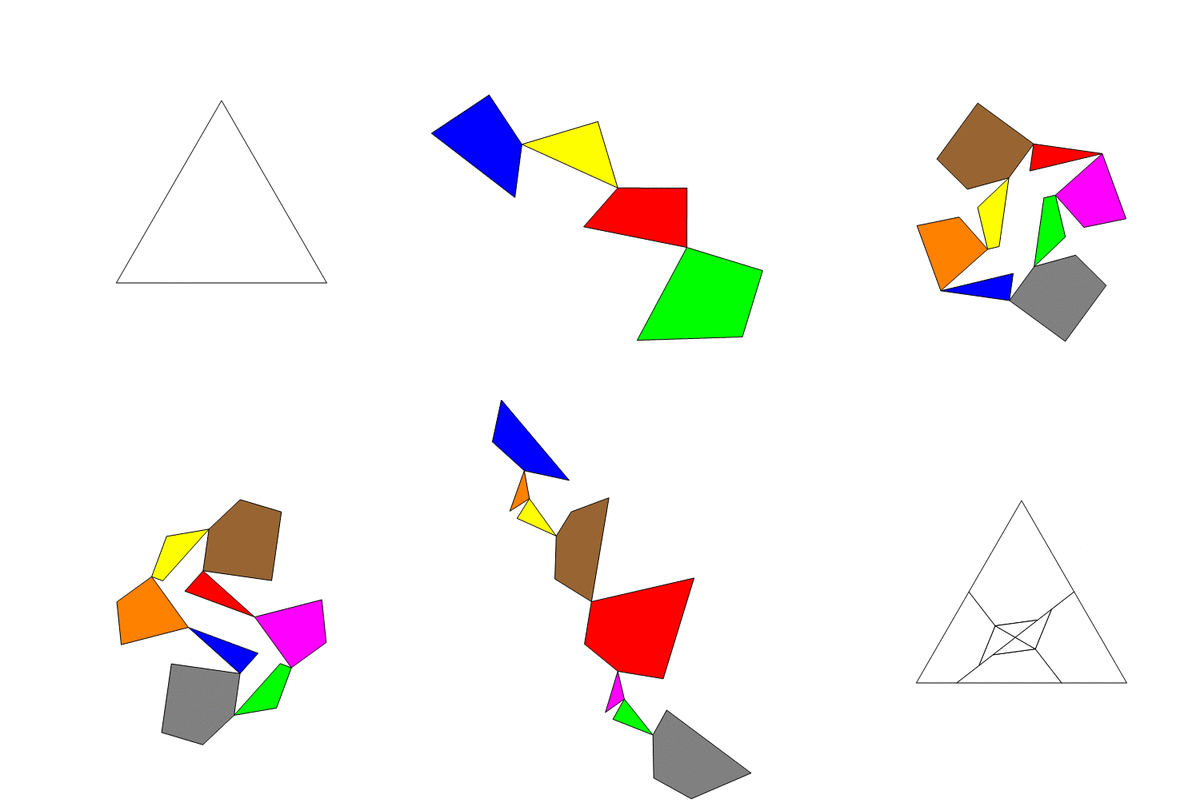
𝑃𝒓𝒂𝒋𝒂𝒚
@Pst@mathstodon.xyz ·Mar 29
Thread reply
@Danpiker@mathstodon.xyz 👍 nice
0
0
0
Open reply Open reply 
kubi
@bikubi@mastodon.social ·Mar 25
Thread reply
@Danpiker@mathstodon.xyz i just absentmindedly stared into the center of this one (where my cursor was sitting), and when i stopped the animation by removing the cursor I perceived an unusually intense "reverse motion optical illusion"... even the text box i'm typing this in seems to spiral :)
1
0
0
Open reply Open reply 
myrmepropagandist
@futurebird@sauropods.win ·Mar 26
Thread reply
@Danpiker@mathstodon.xyz
Did you see the 3 blue 1 brown breakdown about the Esher painting?
This isn't the same but it feels similar.
Can this get as small as we like?
https://www.youtube.com/watch?v=ldxFjLJ3rVY
2
1
1
Open reply Open reply
Danpiker
@Danpiker@mathstodon.xyz ·Mar 26
Thread reply
@futurebird@sauropods.win Yes - it's a very nice video. There is indeed a link - complex analysis. One way of generating these square tilings is via discrete harmonic functions.
1
0
0
Open reply Open reply 
alg0w
@alg0w@social.vivaldi.net ·Mar 25
Thread reply
@Danpiker@mathstodon.xyz Unbelievably smooth transitions for squares.
0
0
0
Open reply Open reply 
robinhouston
@robinhouston@mathstodon.xyz ·Mar 26
@Danpiker@mathstodon.xyz I like these very much! Have you explained how you made them anywhere?
1
2
0
Open reply Open reply
Danpiker
@Danpiker@mathstodon.xyz ·Mar 26
Thread reply
@robinhouston@mathstodon.xyz Thanks! I'll try and do a little write-up soon.
3
1
0
Open reply Open reply 
RobJLow
@RobJLow@mathstodon.xyz ·Mar 26
Thread reply
@Danpiker@mathstodon.xyz @robinhouston@mathstodon.xyz Ooh, I'd definitely like to see that. I've only worked out how to do a baby version of this kind of thing that's 'flat' (so to speak), where the centres of all the squares are fixed on a square grid.
1
0
0
Open reply Open reply 
Owen Maresh
@graveolensa@mathstodon.xyz ·Mar 27
@Danpiker@mathstodon.xyz would you be willing to share how you make these? I'm either interested in manufacturing theta series over the centers of the squares weighted their areas or the vertices already in this image, and seeing how those theta series change as these are transformed.
0
0
0